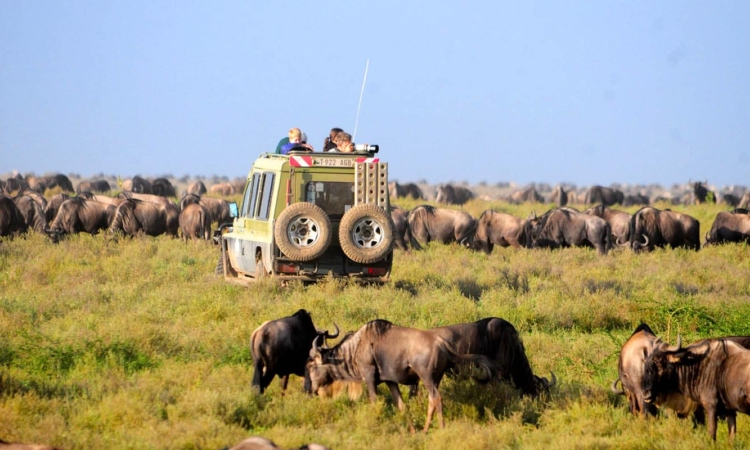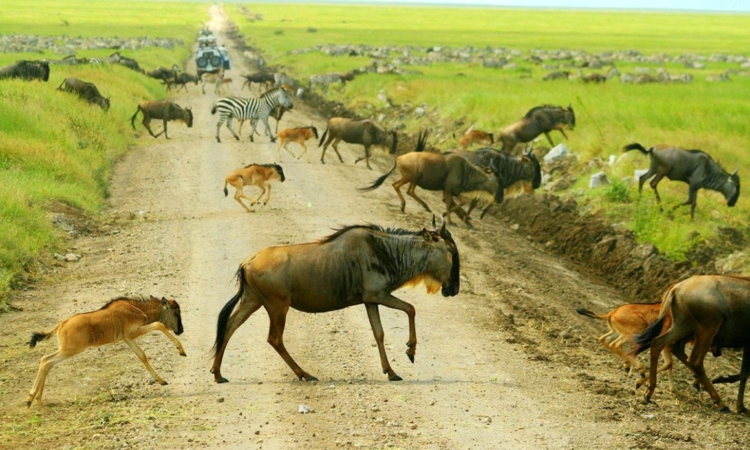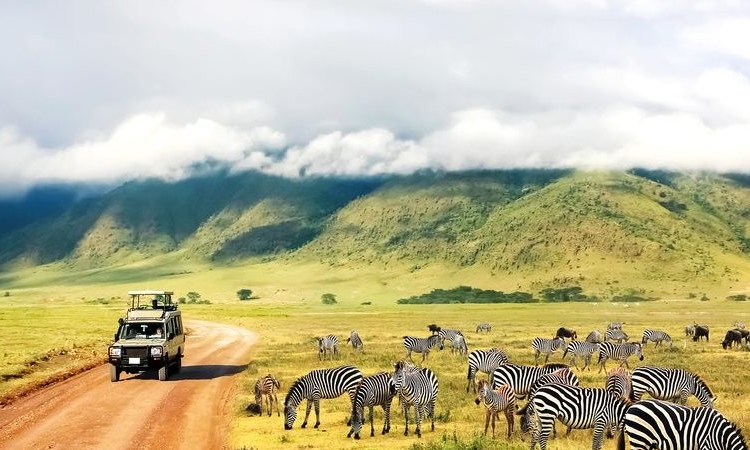
Combining Chimpanzee Trekking & Wildebeest Migration – Chimpanzee Trekking & Wildebeest Migration: The wildebeest migration happens in Kenya and Tanzania only.
This incredible and phenomenal event occurs between months of July and October. It being a spectacle occurrence attracts various visitors from all walks of life just to witness this wild magic.
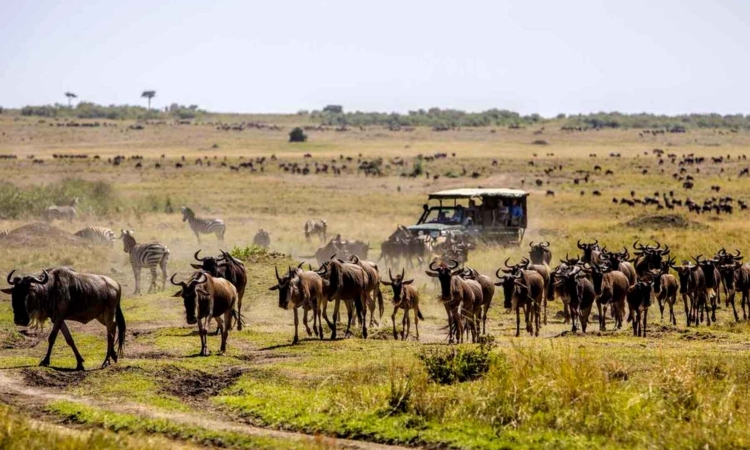
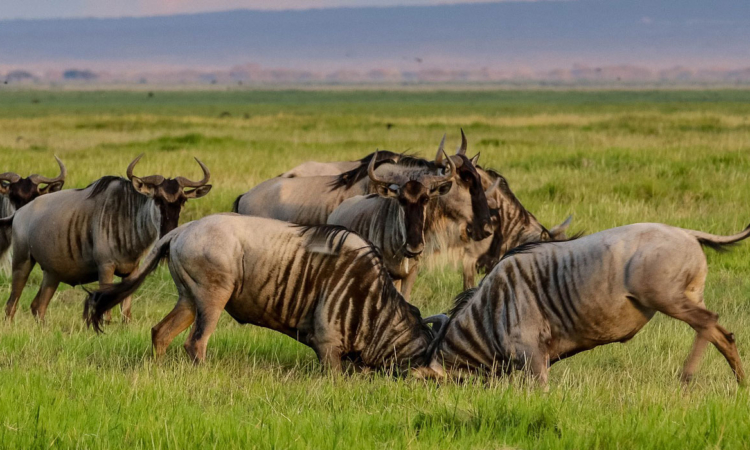
Different animals are seen spanning the vast plains creating an incredible sight loved by nature and wildlife enthusiasts. It is a moment that can’t be missed during your lifetime.
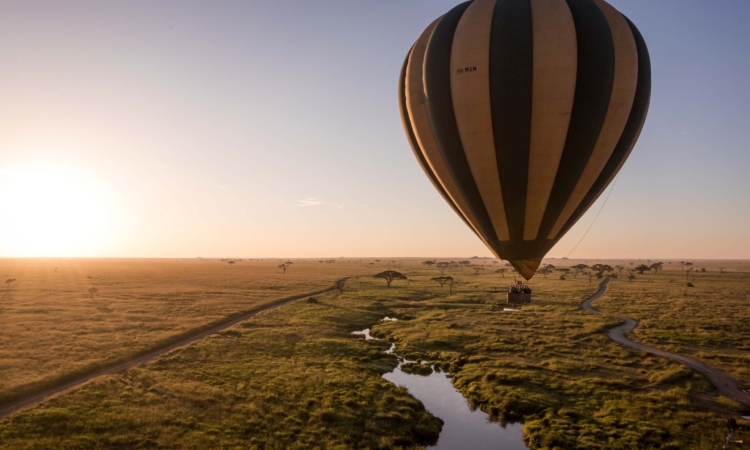
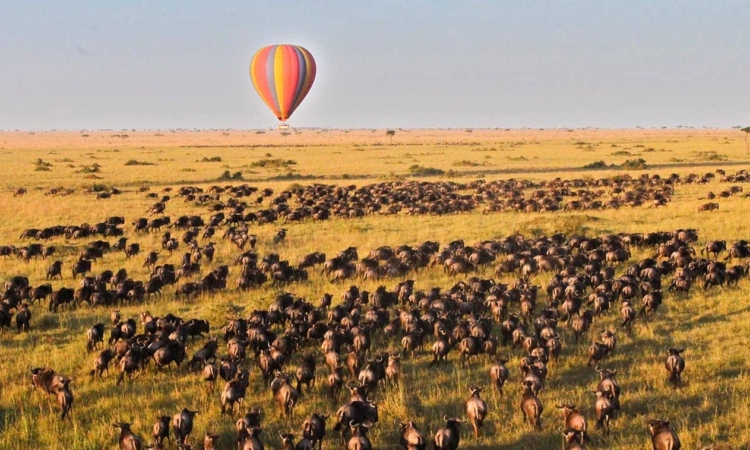
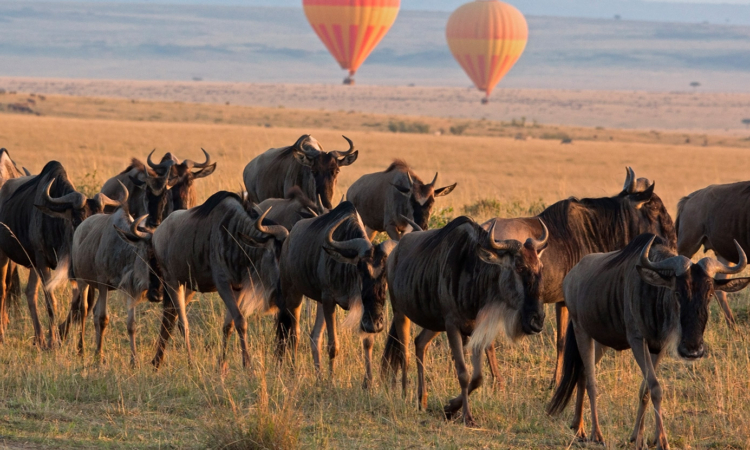
In order to witness the great journey of herbivores, visitors embark on game drives that are either self-driven or chauffer driven. There are full guided tours and hot balloon rides that let you witness the great migration from bird’s eye view.
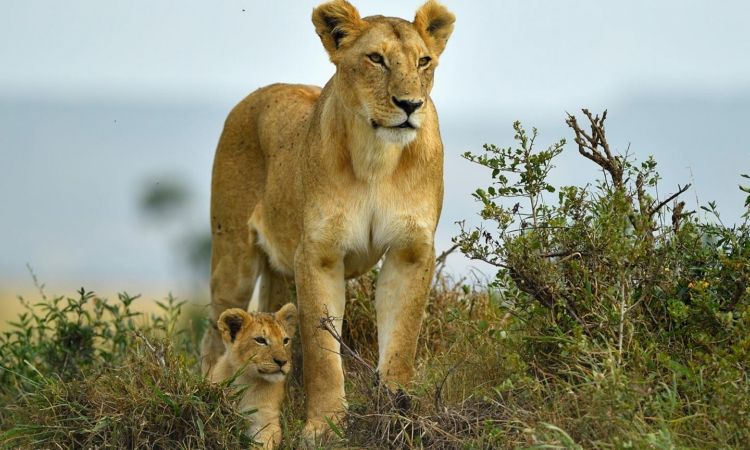
The journey begins in Tanzania at Ndutu area where the animals converge towards the end of December and give birth to their off springs, period between December and March is the breeding season and lots of predators tend to surround this area to feed off the vulnerable young ones.
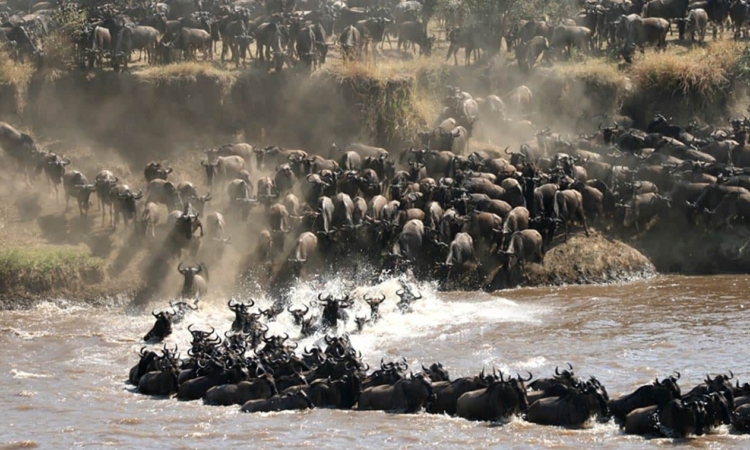
In between April and June as the dry season arrives, there’s shortage of pasture as grass and water sources dries up forcing animals to head north towards the Masai Mara Game Reserve where they have a face-off with predators like crocodiles and lions while crossing the Mara River. This is arguably believed to be the most interesting and dramatic part of the migration.
The migration happens due to natural instinct among animals that pushes them to seek for greener pastures and plenty of water, and some studies have showed that the animals follow trails of nitrogen and phosphorus produced by fresh grass whenever it rains. They have a remarkable sense to smell those nutrients.
What to keep in mind when planning for a migration safari?
Before you embark on a migration safari, you should be able to select and book trustworthy tour company / safari operator who will support you in planning this safari. They know the ins and outs of various parks and are knowledgeable about these safaris so they are able to guide you and ensure you enjoy great migration safari.
Booking your accommodation much earlier plays a huge role in ensuring that you have the best experience during your safari, after a long day under the tropical sun and following the migration journey one deserves a good night’s sleep and relaxing bath.
Selecting the perfect time to carry out your safari is the best way to have utmost experience, when you know what part of the journey you would like to witness, you should be in the right place at the right time such that you don’t lose out the experience you yearn.
Another tip is to make sure that you plan for your money very well, don’t overspend beyond your means. Besides the safari being quite expensive, it is also possible to enjoy it on a budget if you plan wisely.
Interesting facts to know about the wildebeest migration safari.
This is the largest migration in the world with over 2 million herbivorous animals and of these 400,000 are Thomson gazelles, 300,000 are zebras and 120,000 elands, the rest are wildebeests.
The migration is a cycle; events that happen are continuous in nature and therefore it happens every year.
Animals travel for more than 800 km during the migration, this shows how strong they are.
The perfect time to embark on a great wildebeest migration in both Kenya and Tanzania depends on the part of migration you are most interested in; July and September are for those who would like to witness the herds struggle to cross the Mara river, those more interested in the breeding season, then the period of December to March is the best. However, these periods tend to change since this is nature and therefore everything might not go as expected though it is advisable to consult with your tour operator in order to be sure of the timing.
Rwanda and Uganda: Africa’s Top destinations for Chimpanzee trekking
These are remarkably top destinations for chimpanzee trekking in East Africa. Nyungwe Forest National Park and Kibale National Park located in Rwanda and Uganda respectively.
Chimpanzee Trekking in Rwanda.
Located in East Africa, over 500 chimpanzees call this place home. Most of them are located in the Nyungwe National Park.
Nyungwe National Park consists of 3 fully habituated chimpanzee groups; one group is larger than the other with a total of 60 members compared to only 30 found in the smaller group. The park has over 15 trails that trekkers can use and each offers unique experiences.
Nyungwe chimpanzee trek can last for about 1-3 hours. It’s not as hectic as gorilla trekking which involves climbing high altitude areas. Chimpanzee trekking permits cost $90 for both residents and foreign non-residents.
Chimpanzee trekking in Uganda.
The pearl of Africa is among most naturally blessed countries in the world. It is home to the source of R. Nile, endangered gorilla mountains and offers best chimpanzee trekking safaris in Africa in Kibale National Park. This dense forest holds over 1,500 chimpanzees, an unbeatable number and record in the world. Elevated at 1590 meters above sea level, the forest spans an area of 759 sq. kilometers. The park harbors elephants, duikers, leopards, buffaloes and 350 bird species.
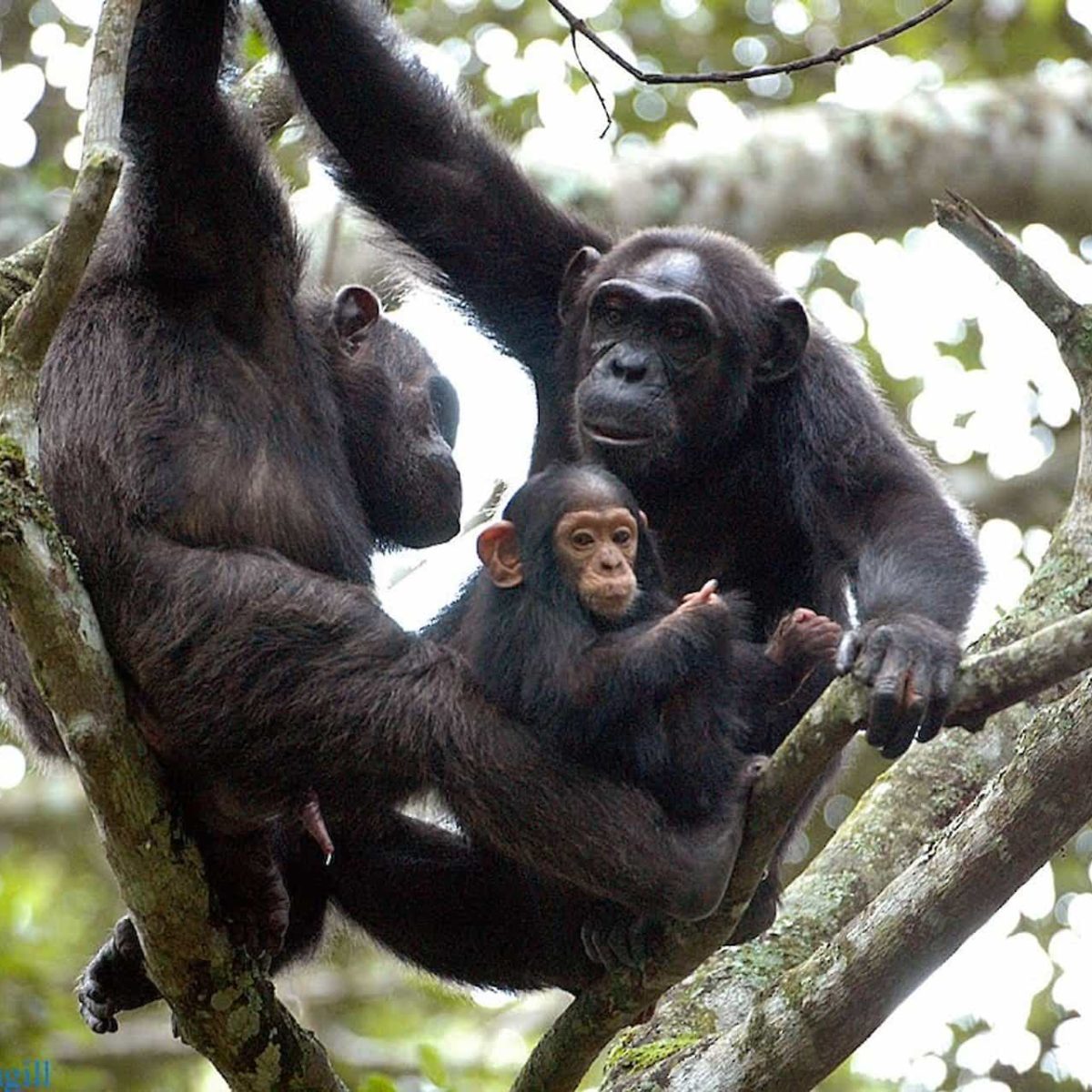
Chimpanzee trekking in Kibale is similar to that in Rwanda. You penetrate the dense forest cover till you come close to the primates. Trekking takes 1-4 hours due to longer treks that stretch for almost 12km. Chimpanzee Trekking costs in Uganda go for $200 for foreigners and $150 for East African residents.
One can also get permits through licensed tour companies; so you can select whatever option is convenient.
The best time to go chimpanzee trekking is during rainy season. This is because the rains are less hence more dry terrain which eases navigation.