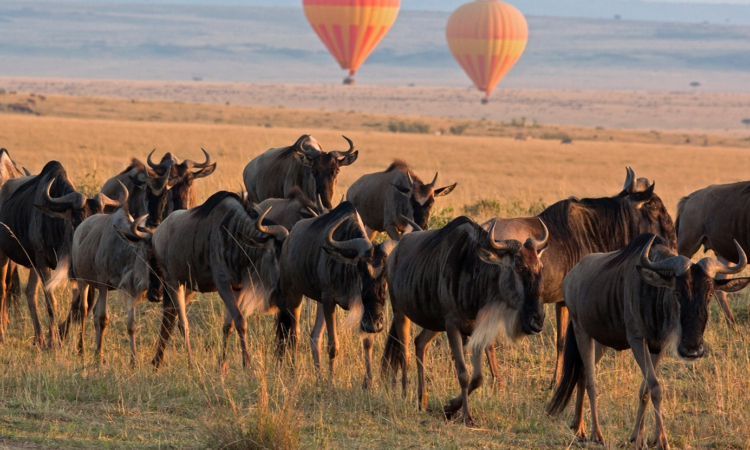
The name wildebeest was derived from a Dutch word for ‘wild beast’ or ‘wild cattle’ while their other name Gnu I’d derived from a local khoekhoe language of the San people. There are two species of wildebeests native to East and south Africa namely the blue/common wildebeests and the black wildebeests.
See the 4-Day Serengeti Migration Safari: Witness the Great Wildebeest Migration or ask for a free quote.
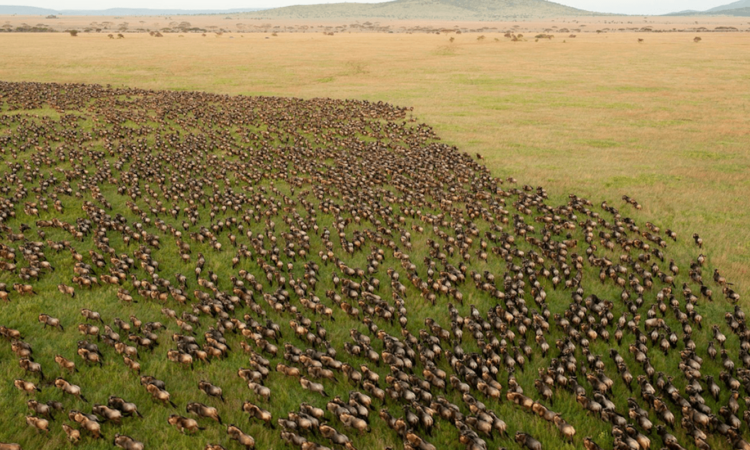
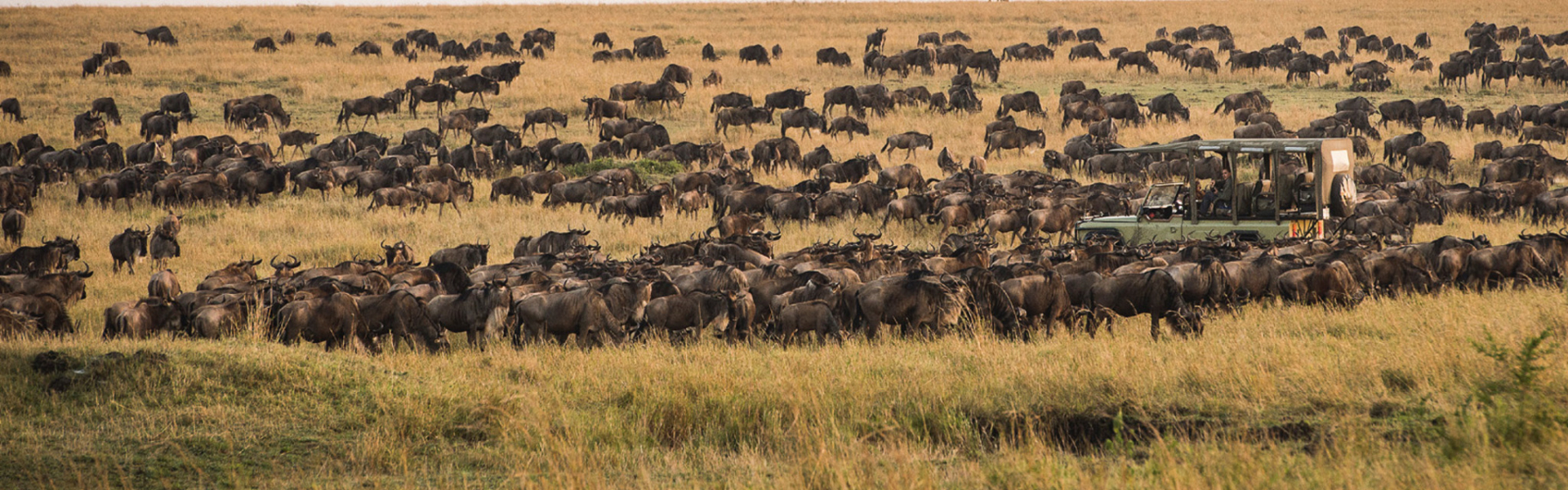
Wildebeests also known as Gnu are antelopes endemic to Africa. Every year in Masai Mara game reserve in Kenya and Serengeti national park in Tanzania, about 1.5 million wildebeests move in search of fresh water and pasture. This has become popular attraction millions of tourists every year.
Wildebeests are mostly predated by lions, cheetahs, leopards, African wild dog and crocodiles. Although they can be hunted they are strong and can run for up to 80 kilometers per hour. They have also developed sophisticated behaviors to combat predators by sleeping in turns while others watch, they also run as a group while protecting their young ones in the middle.
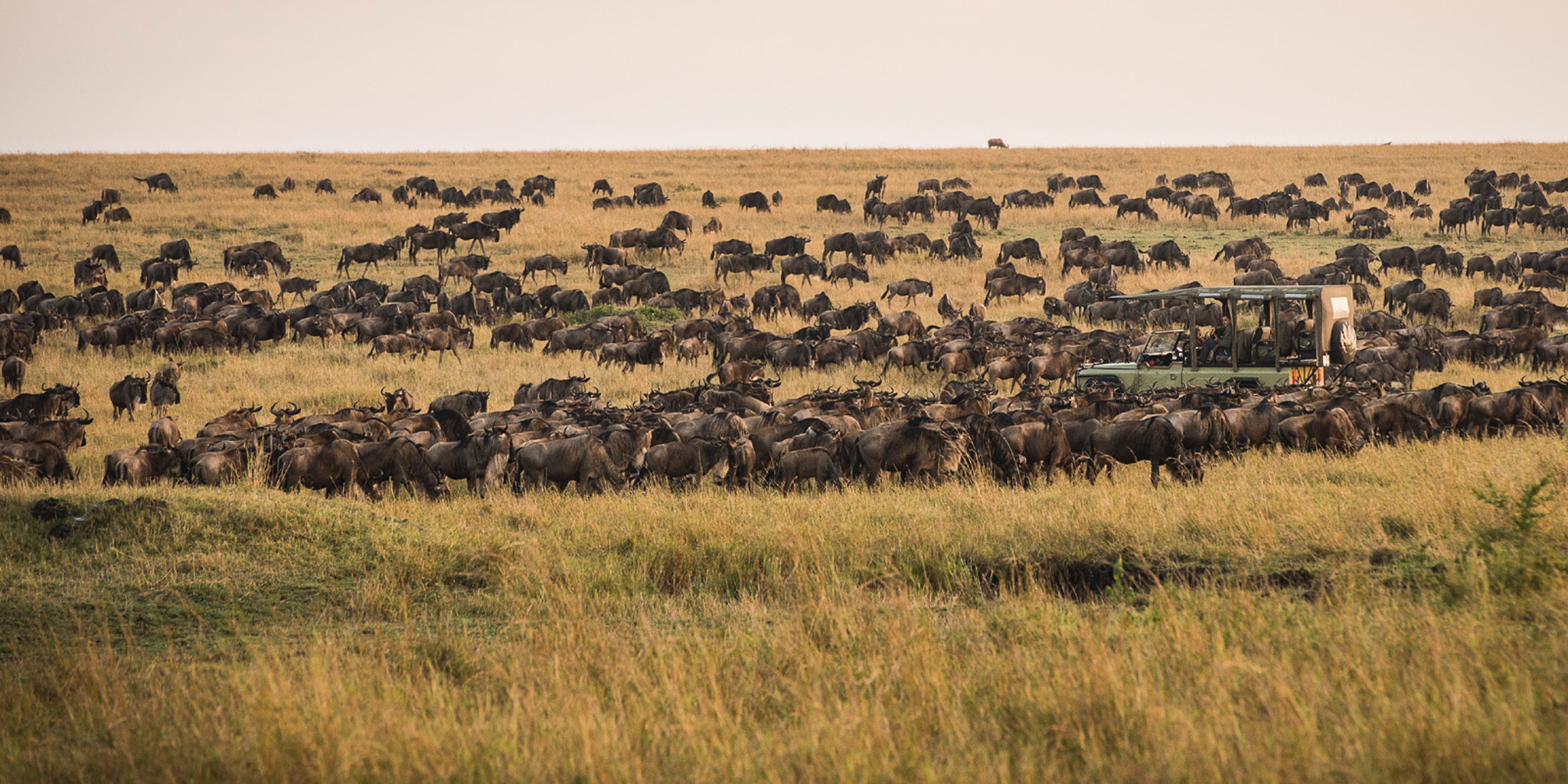
Wildebeests migration in March
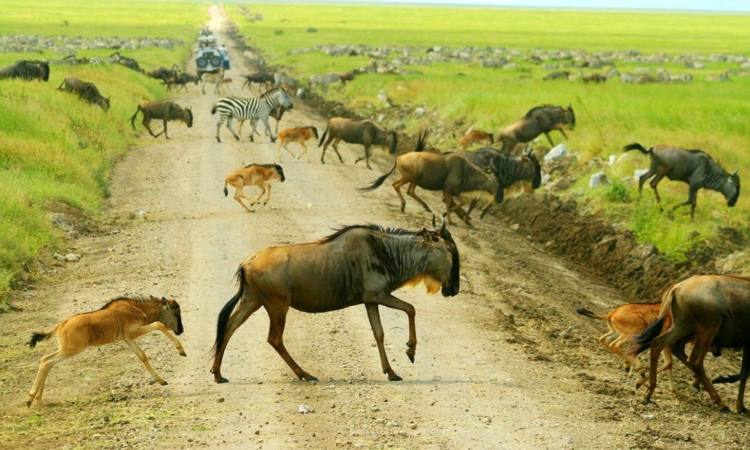
Wildebeests Migration in March in Ndutu region and Kusini Maswa regions before moving to the southern plains of Serengeti national to the central areas and western corridor. This can be interesting during the safari because newly born calves are closely followed up by predators. On a good day you will witness lions and other predators hunting weak, vulnerable and young calves.
About 400,000 calves are born from January to March. You’re likely to see wildebeests giving birth during this time of the year. At Ndutu plains there are high chances of seeing cheetahs other than other parts of Serengeti.
Visiting in March is favorable for budget travelers. Pricing by tour operators and hotels is low compared to the peak seasons. The grass is short, green and plenty as the rainy season starts in mid March.
The abundance of young calves in Ndutu region attracts several cats like lions, leopards, cheetahs, African wild dog and caracals who are forced to co exist together because of the abundance of prey. This makes Ndutu region the best place to be in during the migration in March and photographers can capture outstanding shots in action.
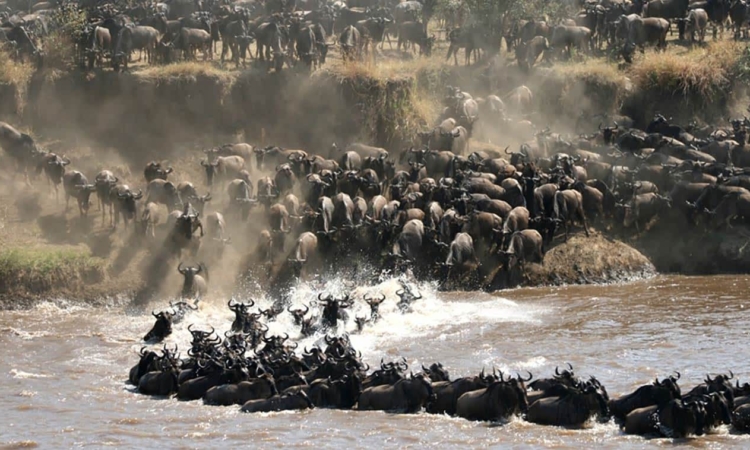
As wildebeests move, they lose many members in herds along the way. Due to many factors like predators hunting both on land. At the river crossings, exhaustion, hunger, thirst and other natural causes.
In March you can book for accommodation in Ndutu region at the northern area.