Gorilla Trekking & Wildebeest Migration Guide – Gorilla Trekking & Wildebeest Migration Guide: Before understanding what gorilla trekking is, it is important to first highlight some specific beauty points of Rwanda as a country. Rwanda has been through many years of trouble and the rebuilding process has finally paid off.
The country has one of the most outstanding tourist layout and is fast growing given the high numbers it attracts from all over the world. Its attractions range from both physical landforms, waterbodies and Flora and Fauna. Rwanda is also blessed to be surrounded by naturally endowed countries specifically Uganda, Tanzania, Burundi and Democratic Republic of the Congo.
Much of Rwanda’s landscape is dominated by green cover which includes both lush flora and vast forest cover. In this lies various wildlife species which interact and form an ecosystem in which the mountain gorillas breed and flourish. There are also various water forms such as lakes, rivers, and waterfalls. These have been prime in making sure that the country receives even distribution of rainfall amounts which enables proper growth of flora on which the mountain gorillas feed and also live.
Gorilla trekking in Rwanda
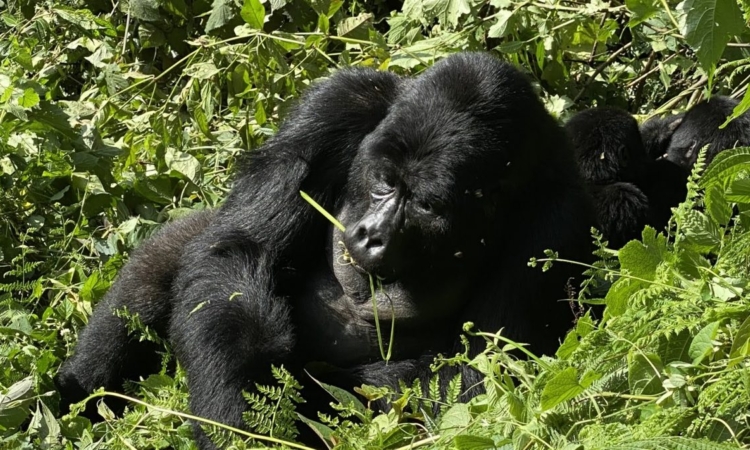
Before explaining about the activity, it’s important to first appreciate the beauty of mountain gorilla species. The mountain gorillas are part of eastern gorilla sub-species and similar their counterparts the Grauer’s Eastern Lowland gorillas. The iconic mountain gorillas live in highland areas from where they also attain their name. They are outstanding primates and have so much similarity to human beings not only in the closeness of their DNA composition but also social lifestyle.
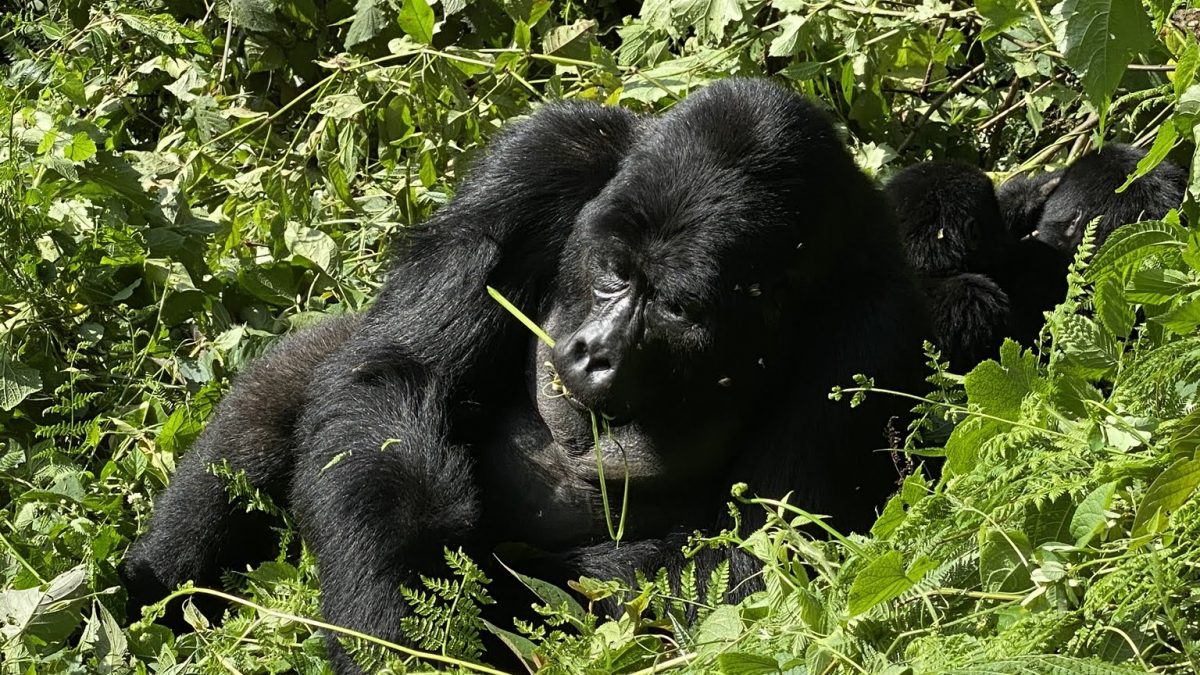
Mountain gorillas are organized in family units and have their leader known as the silverback. Because of the family composition, different families often isolate themselves and live in distant areas from one another because of the potential cruelty that may arise out of constant clashes.
Currently there are 12 mountain gorilla families in Rwanda and these are all habituated and open for tourism daily. The main activity in Rwanda’s Volcanoes national park, a host to these species is mountain gorilla trekking. Gorilla Trekking is the most common tourist activity in the mountain gorilla territory and happens in high altitude areas since these primates live in hilly slopes of Virunga volcanoes. The gorilla trekking adventure goes on for 1-7 hours, depending one location of the gorillas.
Volcanoes National Park
Volcanoes National Park is one of the oldest and biggest national parks in the country but importantly to note, is the fact that it is the only National Park in Rwanda where the mountain gorillas are located. Most of the mountain gorilla population in Volcanoes National Park has lived within the area for countless years, and the entire ecosystem spans along the Uganda and D.R. Congo borders.
This national park is largely back-dropped by massive volcanic landscape mainly the five volcanoes that form part of the Virunga chain of mountains. These volcanoes form the highest of mountains located in a single country in the whole world. The park is known for having volcanic fertile soils on which lush vegetation has been growing for hundreds of years to sustain the lives of mountain gorillas. These volcanoes include Sabinyo, Visoke, Muhabura, Karisimbi, and Gahinga.
Volcanoes National Park also has great history regarding mountain gorilla conservation given the works of the late Dian Fossey who was an American primatologist who dedicated her entire life to conserving these beautiful primates from the early 1980’s. She was buried just on the foothills of Mount. Karisimbi next to her beloved fallen gorilla Digit. Therefore, tourists have an opportunity of visiting her graveyard and learn about her legacy while in Volcanoes National Park and the Virunga conservation area at large.
Booking gorilla trekking permits in Rwanda
Before one embarks on undertaking the mountain gorilla trekking, they require to have in their position a mountain gorilla trekking permit. This is a form of document or ticket that grants a visitor the permission and user rights to access a gorilla family in Volcanoes National Park. It is a mandatory document and therefore before one even thinks of participating they should make sure that a gorilla trekking permit is available.
How one can one access a gorilla trekking permit in Rwanda?
It is advisable for one to book these permits as early as possible before an influx in the purchases especially during peak season months. The high season months include June, July, August, September, December, January and February.
Best time to do gorilla trekking in Rwanda.
The country enjoys average tropical climate and therefore it doesn’t have so much change in its weather conditions from those of its neighbors. Visibility and navigation is hard especially during morning hours and then the terrain becomes slippery which introduces complexities in the accessibility of highest points in the National Park.
It is therefore advisable to consider participating in gorilla trekking tours during dry seasons which run from July to September, and later from mid – December to February. The dry season provides for the required sunlight and dry terrain which eases the trekking. That notwithstanding, there are visitors that would prefer to engage in mountain gorilla trekking during wet seasons if they want to enjoy discounted rates from hotels and tour packages.
Price of gorilla permit in Rwanda.
Rwanda has the highest price of gorilla permits in the east African region and world over. Rwanda charges 1,500 US dollars for each gorilla permit. The reason for this decision by the government was to provide a luxurious experience to all visitors. The price of gorilla permits cuts across National, Regional, and International visitors.
Other activities in Rwanda other than gorilla trekking.
Apart from mountain gorilla trekking, Volcanoes National Park presents chances to undertake other interesting activities including volcano hiking, birding, nature walks, cave exploration and golden monkey tracking.
What to carry?
- Backpack.
- Goggles / sunglasses.
- Hiking boots.
- Hiking trousers.
- Insect repellent.
- Hat.
- Long sleeved shirt.
- Food pack and water bottle.
WILDEBEEST MIGRATION SAFARIS
Kenya.
Kenya has been known for many aspects including sports, politics, entertainment and much more but Kenya is also one of Africa’s leading safari destinations and this is attributable to numerous experiences and attractions. These aren’t limited to the fauna and flora, but go as far as physical landforms, water bodies and cultural diversity. Kenya is therefore a beacon of attractions when it comes to Africa’s tourism.
Kenya is located in East Africa and borders the Indian Ocean on its eastern coastline, but it is also one famous location that hosts the great wildebeest migration, though visitors have more to expect other than just viewing this great migration.
Tanzania.
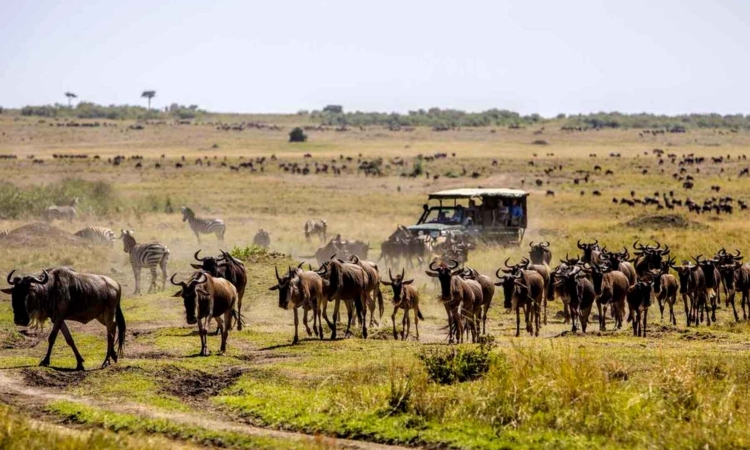
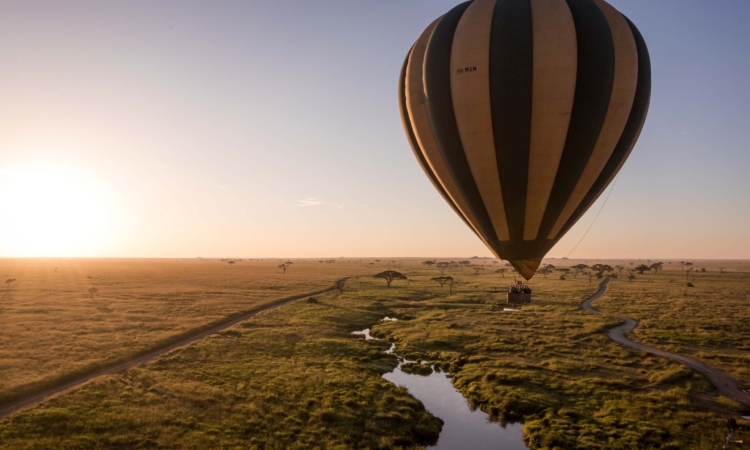
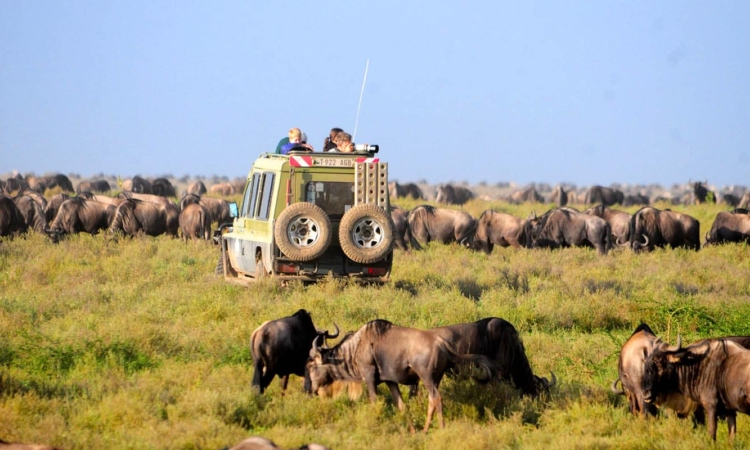
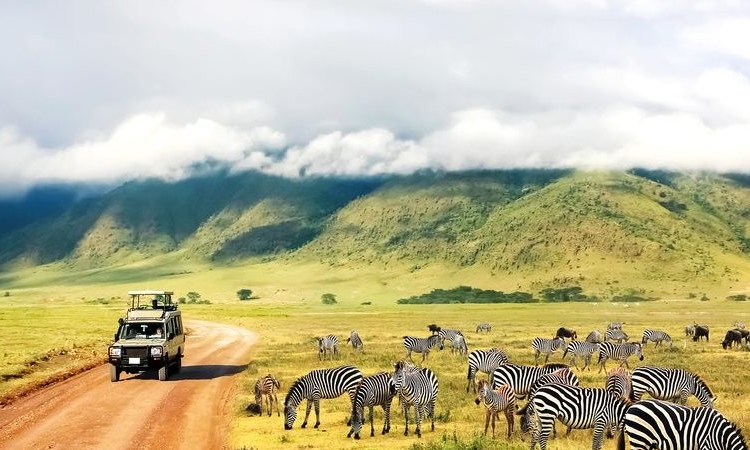
Wildebeest migration in Tanzania happens in its northern region, in the greater Serengeti national park and Ngorongoro Conservation Area. It’s an annual activity and given the landscape that’s largely composed of large plains, animal movements can be clearly viewed during game drives. Tanzania is also the biggest country in East Africa by land mass and this therefore advances an edge on how much land is spared for wildlife conservation.
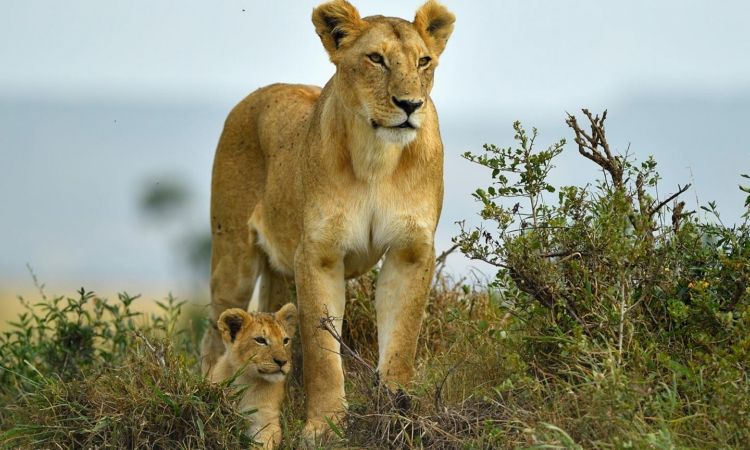
Visitors should as well expect to spot other wildlife species such as lions, hyenas, cheetahs, leopards, buffaloes and more predators that add flare to the wildebeest migration.
The famous wildebeest migration safaris in Kenya and Tanzania.
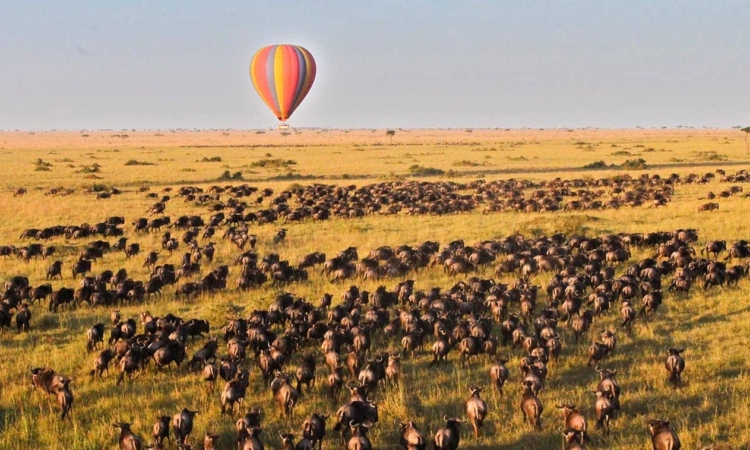
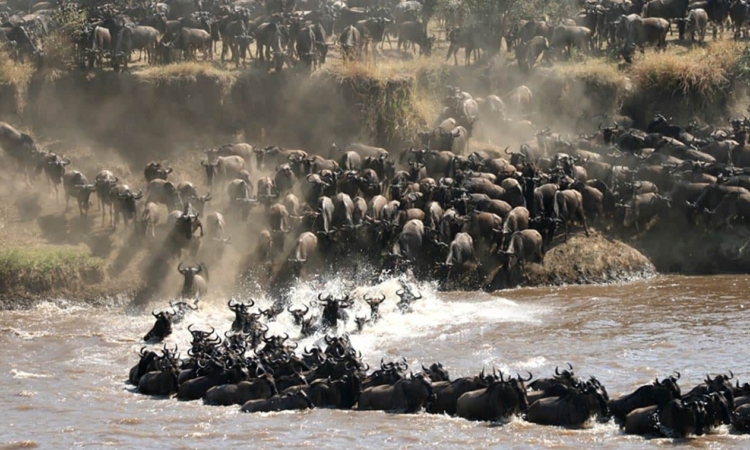
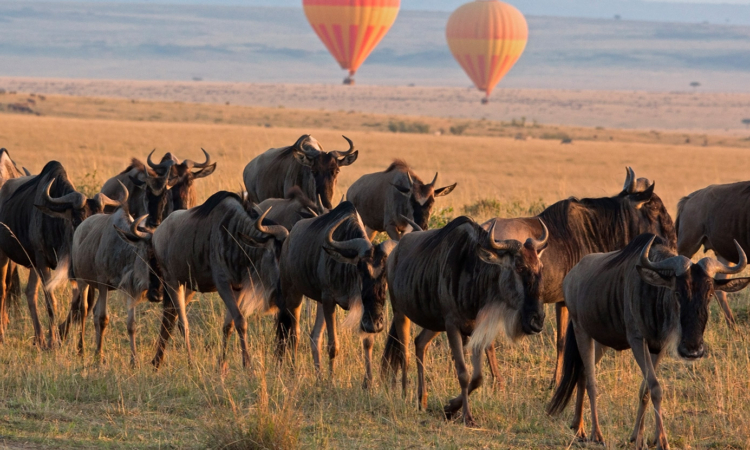
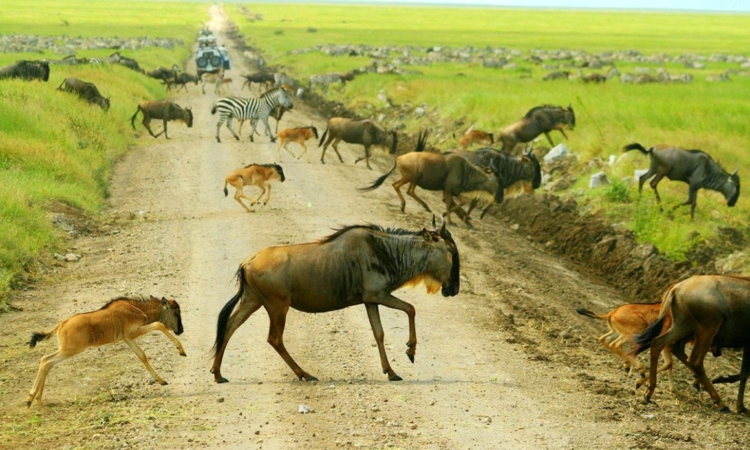
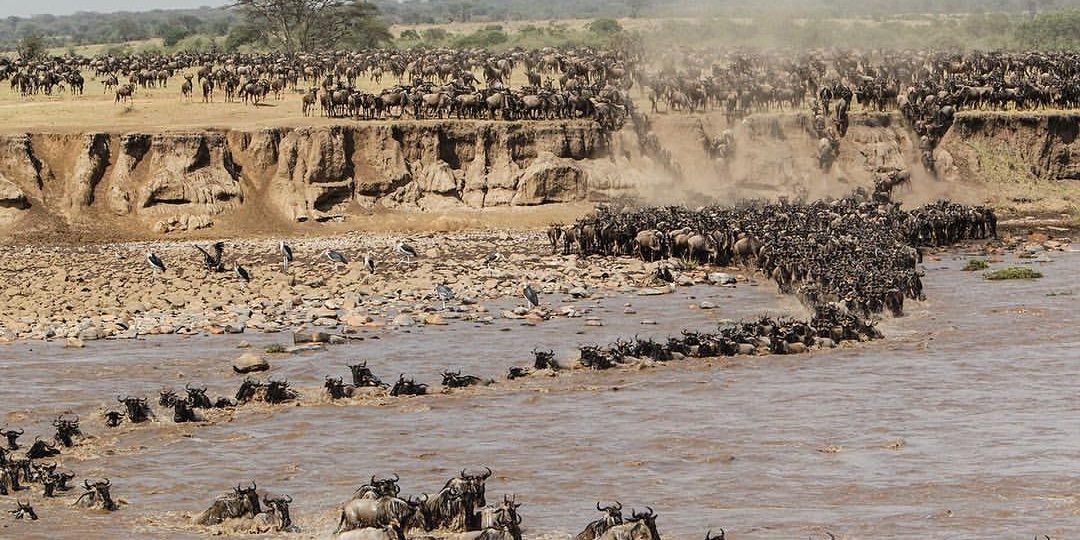
Wildebeest migration safari allows one to witness migration of the wildebeest herds to and from Tanzania’s Serengeti National Park and the Maasai Mara of Kenya.
National parks where great migration happens.
Serengeti National Park.
It is one of Tanzania’s largest national parks, situated near the Ngorongoro Conservation Area. It sits on the Northern region of Tanzania on the border of Kenya’s Maasai Mara. Just like other neighboring Game Reserves, Serengeti National Park is composed of open savannah plains and apart from wildebeests, it is home to other big 5 mammals. It’s from here that wildebeests either set off their journey to Masai Mara or have it as their destination when they arrive from Kenya.
Maasai Mara National Reserve.
It’s one of Kenya’s greatest composition of savannah vegetation and it is therefore of little wonder that the wildebeests decide to migrate here.
The Maasai Mara reserve covers more than 60 square miles of land, and getting into it shows glorious beauty and might. It also comprises of other wildlife species with which the wildebeests interrelate like Buffaloes, Hyenas, Jackals, African Foxes, Lions, Elephants, gazelles, antelopes and zebras.
Why the great migration happens in Kenya and Tanzania?
Food security for wildebeests, just like humans, is always an obstacle to their livelihood. Therefore, the main drive and desire as to why these animals always engage in the migration is simply because they seek better areas of grazing and survival of their off springs. It goes without saying that their population is so high that the available pastures cannot be enough for their survival every year. It makes the situation more complicated when considering that their species are not the only ones that depend on grass but inclusive of zebras, antelopes, and other herbivorous animals.
With such a background it shouldn’t be a shock and surprise to visitors that wildebeests engage in annual migration safaris as it has been the case for hundreds of years. But seeking better grazing grounds cannot be enough and the only reason as to why these animals migrate. Another important aspect is that they migrate partly because of the growing numbers of predators and yet it’s around this period that they would be calving.
Because they want their off springs to have better surviving odds, the adult animals have adopted the system of migration than concentrating in one place for one decade to another without any shifts in movement.
Tips for planning migration safaris.
The very first thing to consider for a tourist planning to travel to either Kenya or Tanzania, is to contract and hire a professional tour operator. The good side of this is that the visitor doesn’t have to fear for any none professional performance and having a nasty experience.
Make sure you carry enough money with you because given the high number of activities and destinations in both countries, one may decide to take part in the various activities that may avail themselves.
Make earlier consultations about various activities engaged in the wildebeest migration since each month of the year has a dominant activity that is greatly unique from other months. This will therefore inform one of what activity they would desire to experience.
Interesting facts about the wildebeest migration safaris.
Wildebeests have the highest population of wildlife species in both Serengeti National Park of Tanzania, and Maasai Mara of Kenya. They are over 1.5 million at a single location.
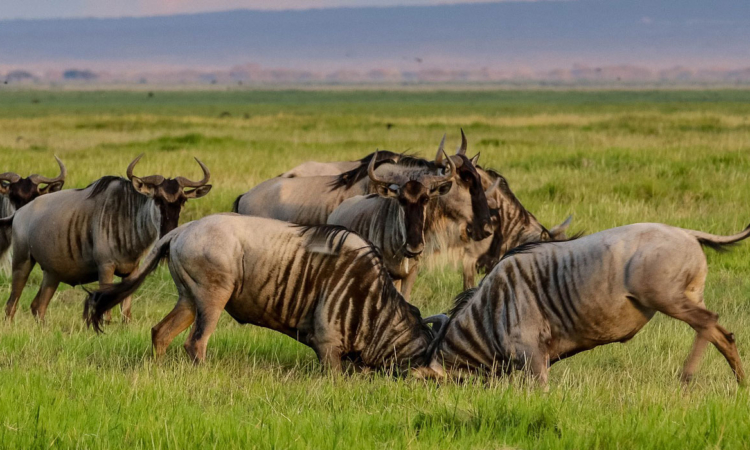
wildebeests belong to the wider order of antelopes, although they have distinct physical features which make them so unique from the antelopes as known ordinarily.
The wildebeest migration takes over 800 kilometers to and from Kenya’s Maasai Mara, and Tanzania’s Serengeti National park.
During wildebeest calving season, over 500,000 calves are born and these start to walk shortly after birth, until a few weeks when they can finally join the migration.
Lions, cheetahs, and hyenas are the greatest predators of wildebeests during migration, whereas the Nile crocodiles, get their turn while the herds cross Mara River.
Best time to go for wildebeest migration safaris in Tanzania and Kenya.
Both Kenya and Tanzania share the same climatic conditions. Both countries are located in the tropical region of Africa and therefore have a lot of similarities in even the months of the year. Because of their location, they experience both the dry and wet seasons annually. The dry seasons just as the wet seasons, happen twice a year.
The first dry season runs from July to September, before the final season in December until February. Therefore, it is advisable that travelers seek to engage in wildebeest migration in dry seasons. That is the best time to undertake wildebeest safaris.