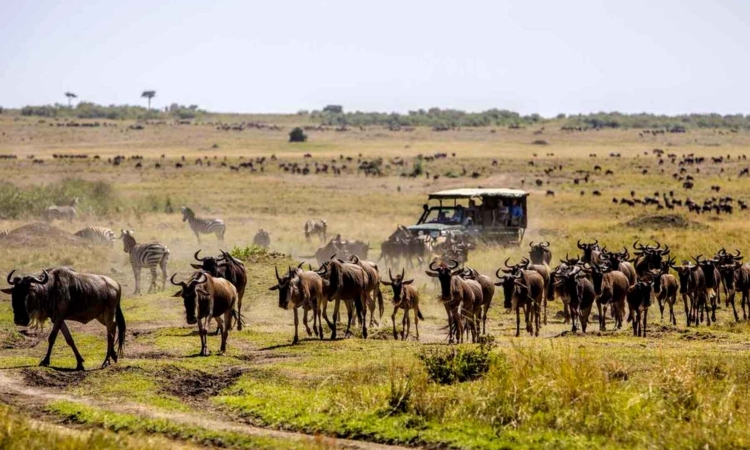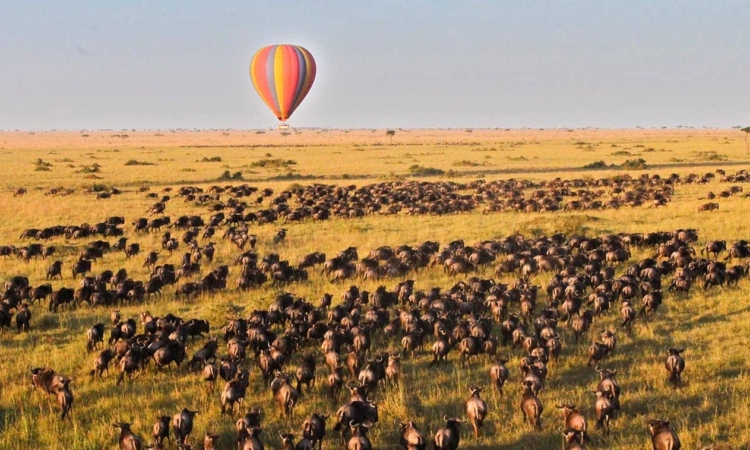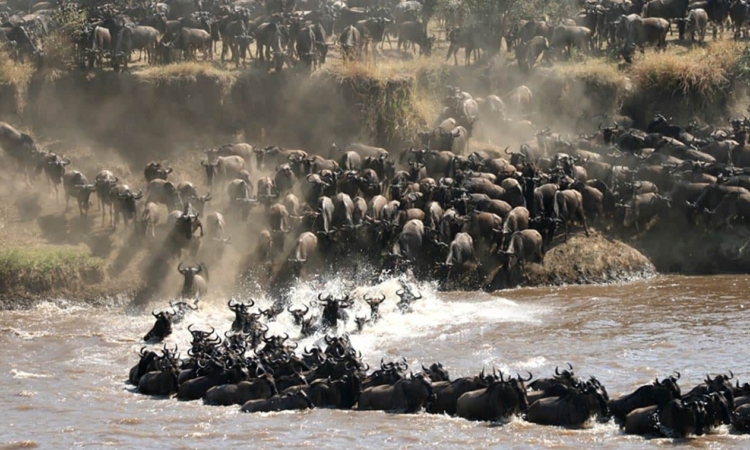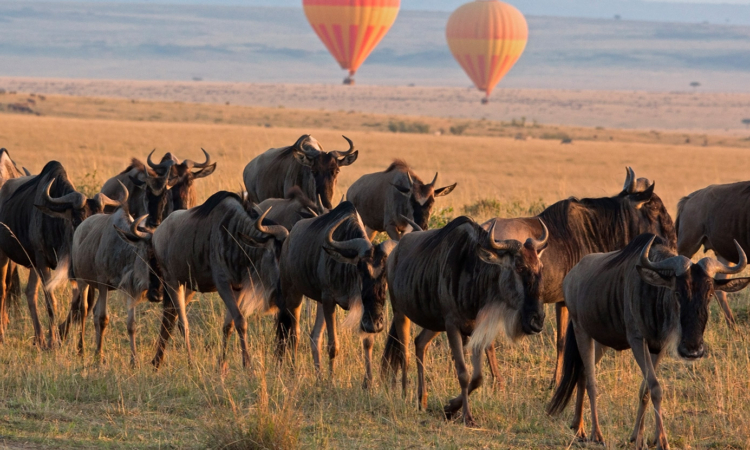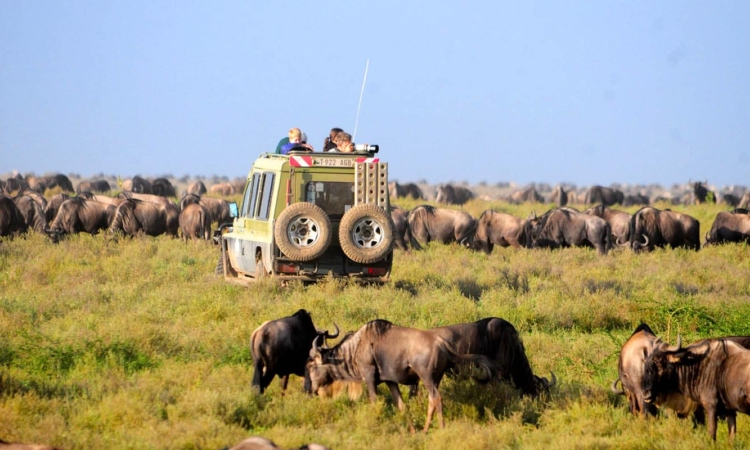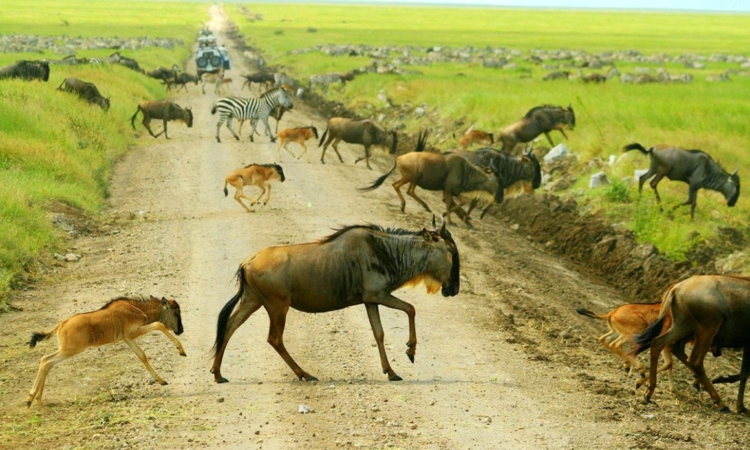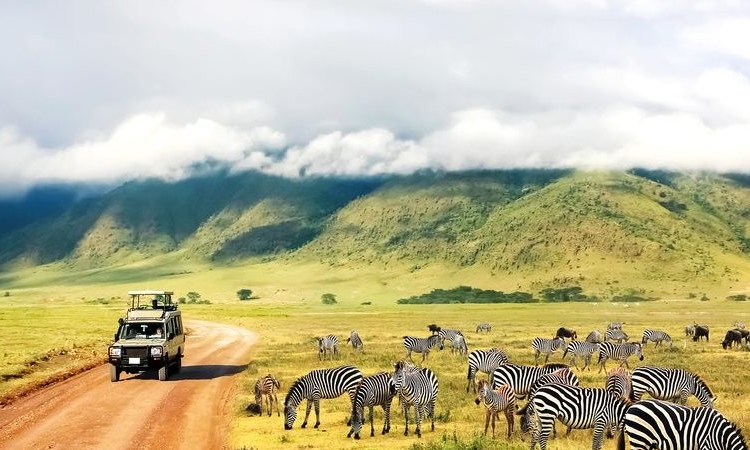
Wildebeests migration is one of the most thrilling wildlife spectacles on earth, the exact reason of their migration isn’t clear but scientists and researchers suggest that the herds move due to primal instincts guiding them to thunder and lightening areas for pasture and water. Wildebeests are able to graze together with zebra because they eat different parts of the same grass.
The migration happens in a circular way year in year out and this includes 1.5 million wildebeests, thousands of zebras, gazelles, elands and other antelopes embarking on a journey in search of water and pasture. This takes place at Ngorongoro conservation area, Serengeti national park and Masai Mara national reserve.
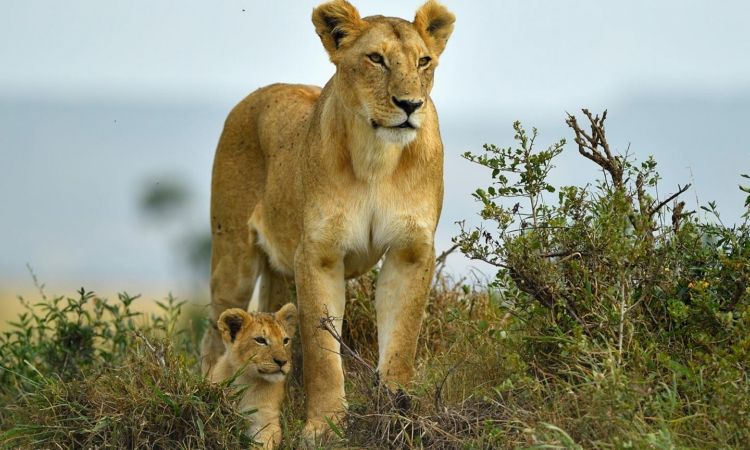
There are about 3000 lions living in Masai Mara and Serengeti Ecosystem that actively follow migration herds annually.
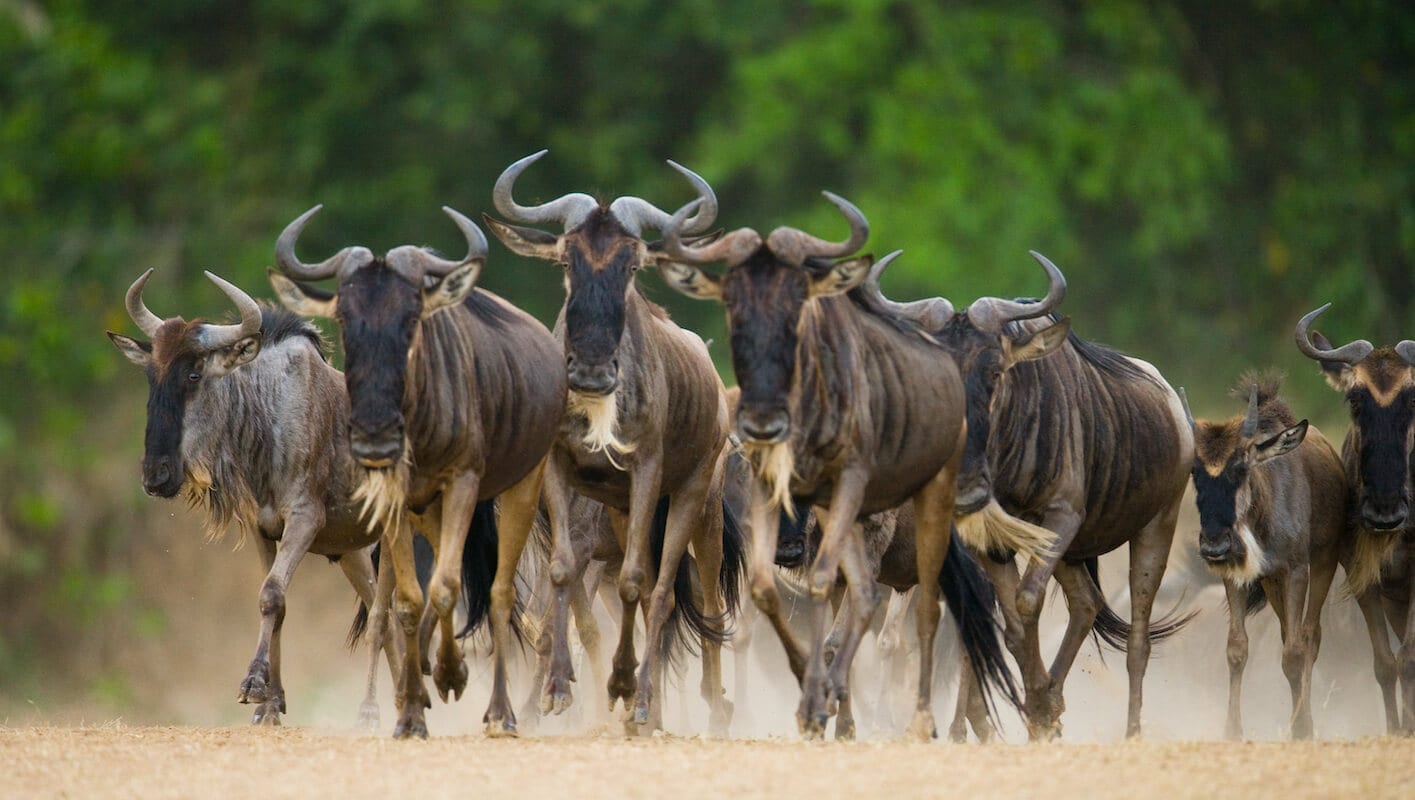
Wildebeests migration in April
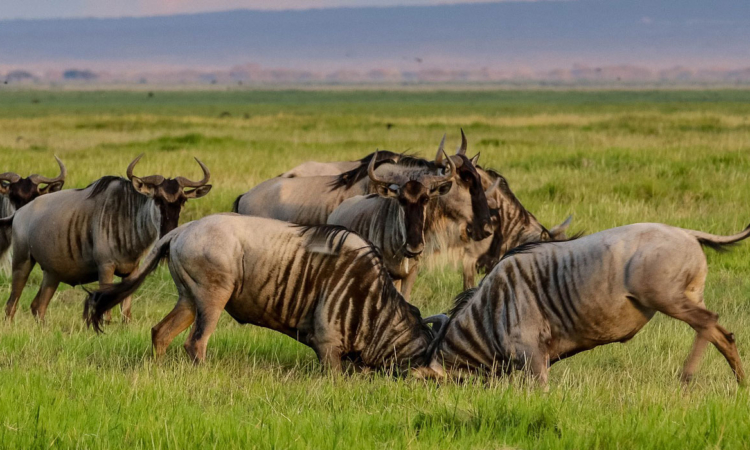
Wildebeests migration in April: After calving season in February and March, the wildebeests move lazily through Moru Kopjes towards the central part and western corridor of Serengeti national park in April. Mating begins from April to May and you’re likely to see males fighting in order to show their power to win females.
From January to March every year, almost 1 million wildebeests are born with about 8000 calves born in a day. Surprisingly out the thousands of wildebeests and zebras born each year, about 250,000 wildebeests and 80,000 zebras die during the migration due to thirst, hunger, exhaustion and predation.
Choosing the right accommodation to sleep in while at Serengeti in March will determine your migration experience. You must sleep in the northern parts of Ngorongoro conservation area or south of Serengeti national park. Some of the places to book include; Dunia camp and Ubuntu migration camp.
Some camps and lodges also give off season rates for travelers hence favoring budget tourists.
Although wildebeests move and can be seen all year round, the best time for visiting to witness dramatic encounters is from July to August when there are river crossings at the great Mara river, this is also the best time for overall wildlife watching in Masai Mara and Serengeti. January to March is also interesting because of the calving season. March is also the beginning of the rainy season therefore the grass is lush green providing good photographing opportunities.