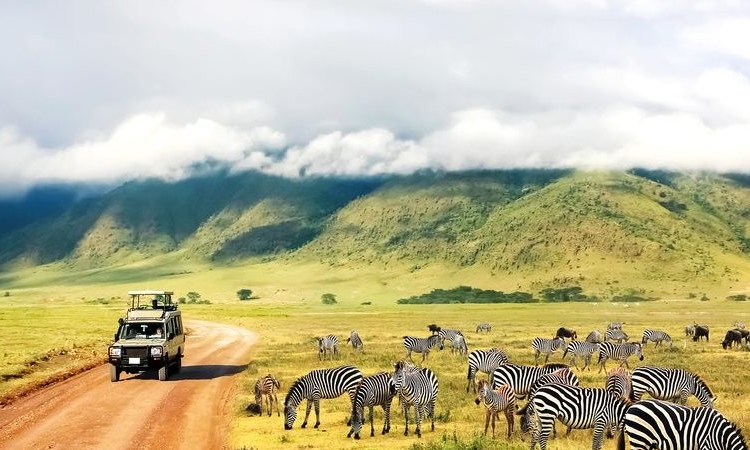
Ngorongoro conservation area derives its name from Ngorongoro crater found within the area boasting as the largest intact and unfilled caldera in the whole world.
The conservation area covers an area of 8292 kilometers squared spanning savannah grasslands, mountains, crater lakes, rivers, swamps, forests, woodlands and home to about 25,000 large animals including numerous lions.
Ngorongoro crater
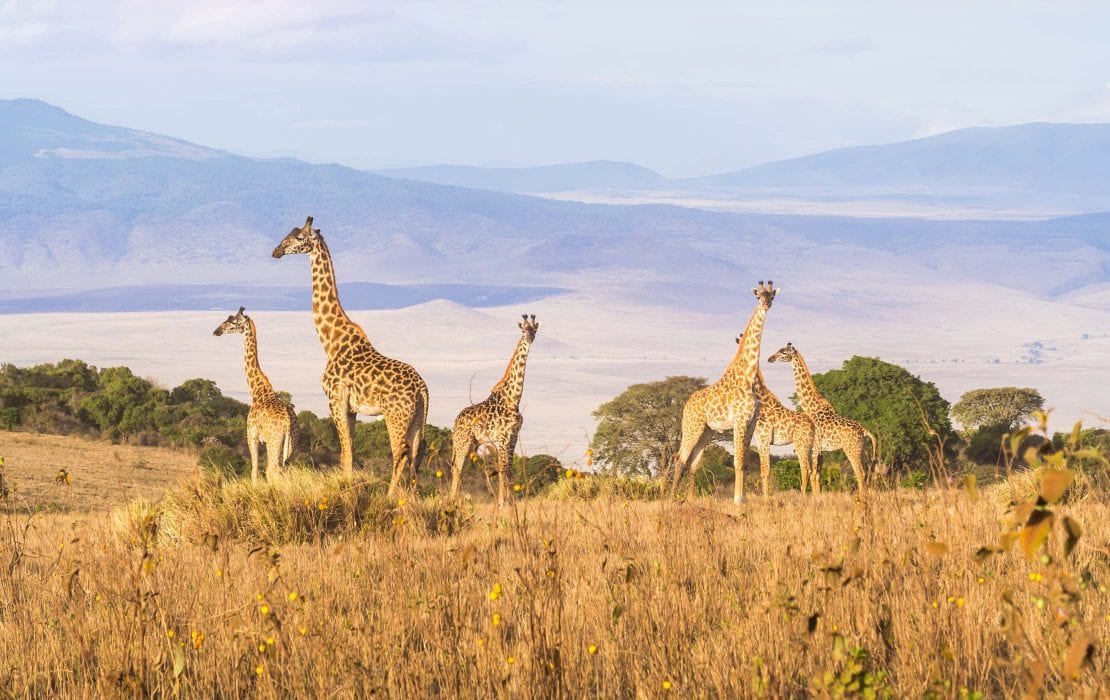
The Ngorongoro crater is the highlight of Ngorongoro conservation area, the crater boasts as the world’s largest intact and unfilled caldera covering an area of 260 kilometers squared. The crater is about 610 meters deep.
Ngorongoro crater is now an habitat for diverse wildlife species. Apart from the. Main Ngorongoro crater, there are also other craters in the area that is Empakai crater and Olmoti crater.
Wildebeests migration
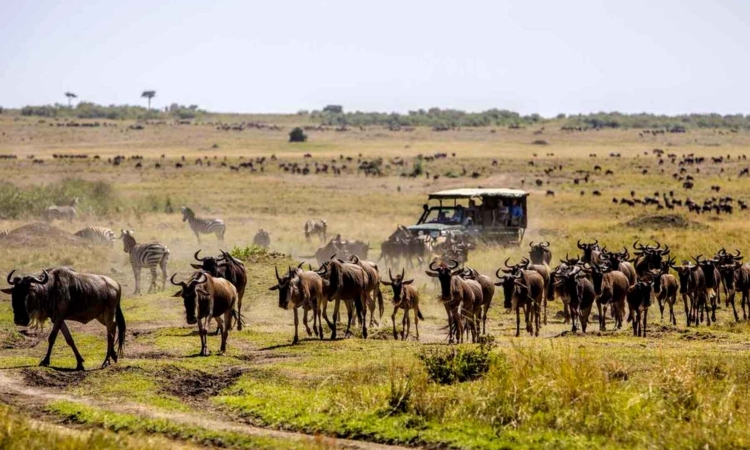
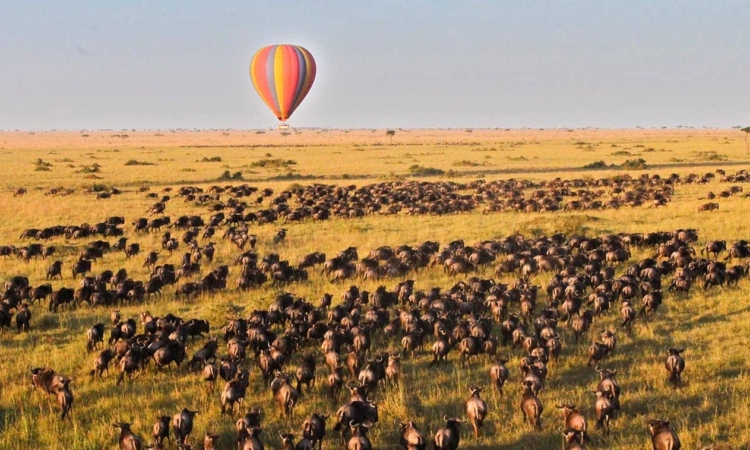
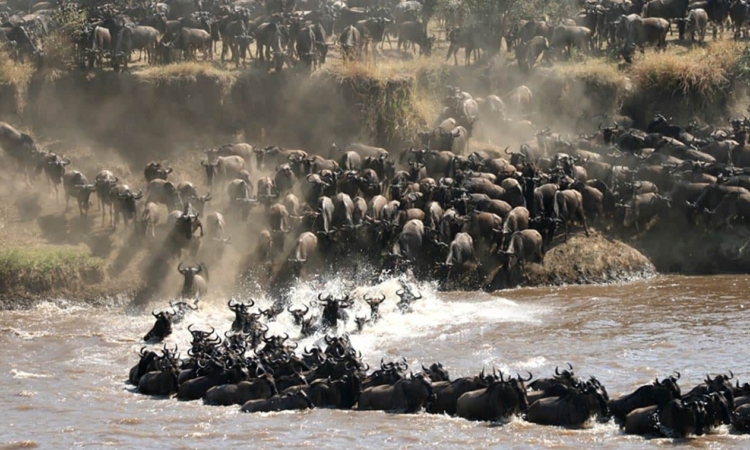
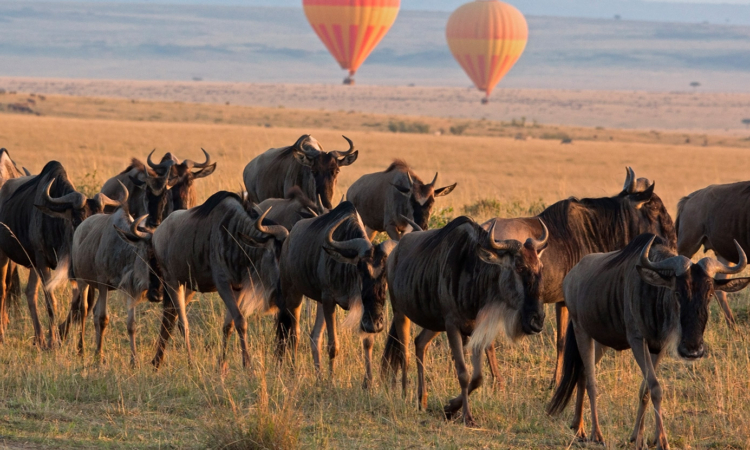
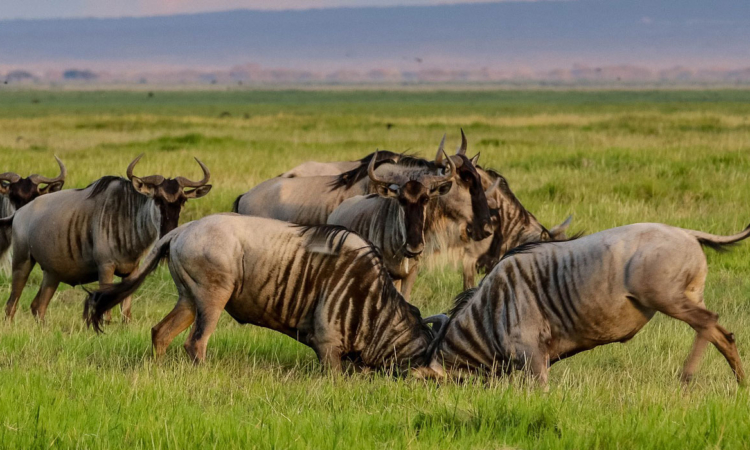
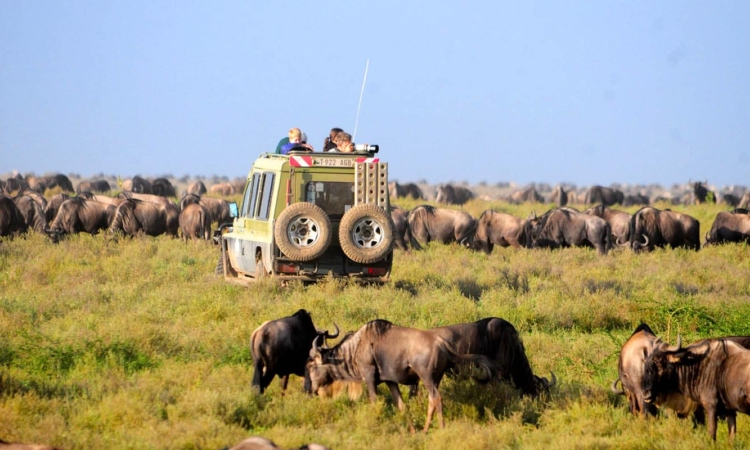
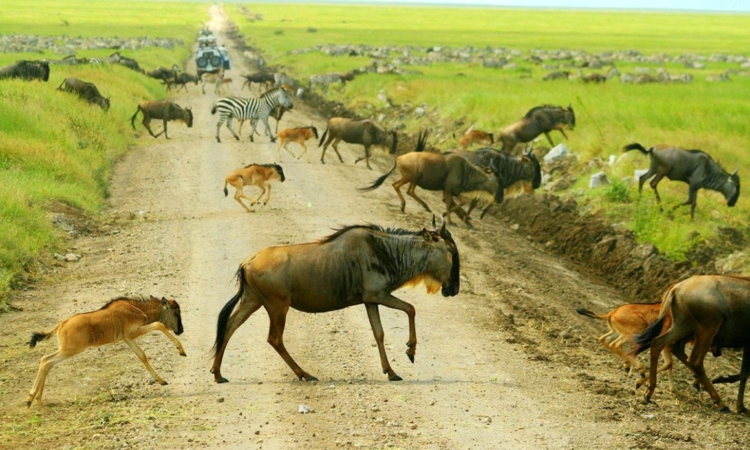
The Ngorongoro conservation area is one of the best wildlife viewing destinations in Africa. The annual wildebeests migration partially takes place around the Ngorongoro conservation area from around December to February when thousands of wildebeests are born at Ngorongoro before they embark on their usually journey to Serengeti national park and then to Masai Mara national reserve in Kenya.
Olduvai gorge
Olduvai gorge is one of the most important archeological sites in the world. It’s a 14 kilometers long deep ravine which has been subject to study and research for over 80 years resulting to evidence of human evolution and findings of hominins remains dating from 2.1 million years and 3.6 million years ago. Tourists interested in history and archeological sites can visit Olduvai Gorge and learn more about human evolution and its history.
Wildlife Watching
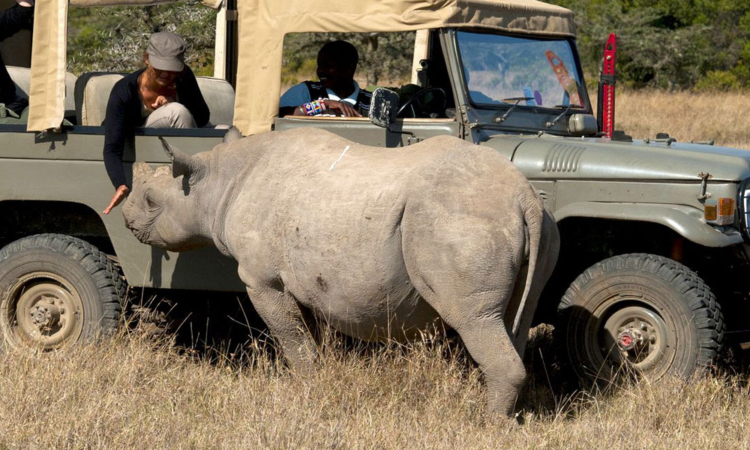
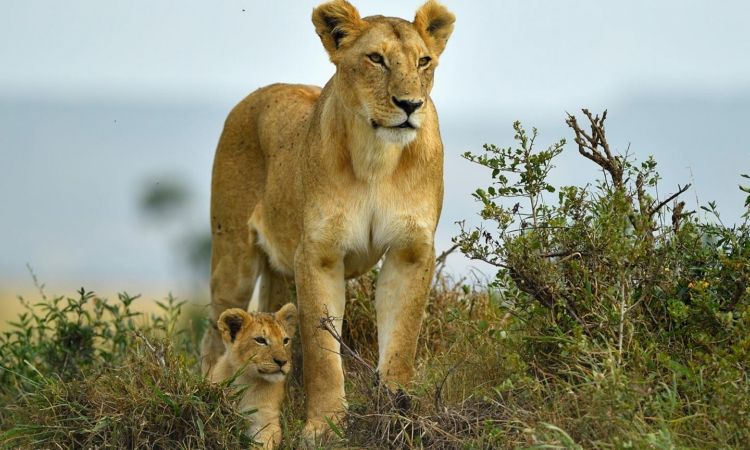
The density of wildlife at Ngorongoro conservation area makes it one of most sought places for wildlife Watching in Africa. Some of the animals living in Ngorongoro conservation area include wildebeests, zebras, gazelles, hartebeests, lions, leopards, cheetahs, hyenas, rhinos, black rhino, Thompson’s gazelle, spotted hyenas, jackals, African hunting dog, impala, hippos, waterbucks, reedbucks, elephants and many others.
Birding
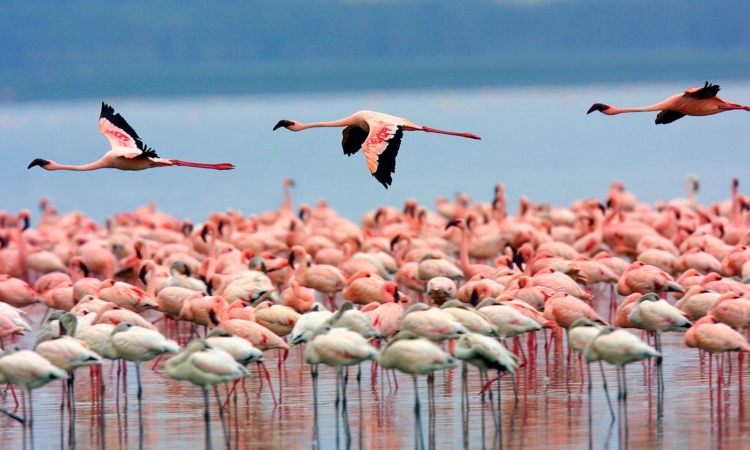
There are over 500 species of birds residing at the Ngorongoro conservation area making it one of the top birding destinations in Tanzania. Some of the examples of birds found in the area include European bee eater, caspian lapwing, lesser kestrel, white eyed slaty fly catcher, Jackson’s turaco, black winged lapwing, usambara weaver, little yellow fly catcher, hunter’s cisticola, kori bustard, ostrich, fan tailed widowbird, namaqua dove, great white pelican, black belied bustard, African sacred ibis, red billed teal, black crake, emerald spotted wood dove, Kenya Rufus sparrow, spur winged goose, mountain buzzard, cinnamon chested bee eater, African white backed vulture and furious whistling duck to mention a few.
Cultural encounters
Tourists visiting Ngorongoro conservation area can visit the local Masai people of indigenous Hadzabe tribe living around the area. The Wadzabe are hunter gatherers who have maintained their way of life for thousands of years. Without interruptions from the modern world. There is so much to see and learn from both the Hadzabe bush men and Masai pastoralist. You need to visit the people during you’re trip.
Nature guided walks
Nature guided walks can be organized around the Ngorongoro conservation area highlands and around the crater rim. The nature guided walks led by an armed and knowledgeable guide are a better way to get close to wildlife. Learn more about plants, birds and everything else during the walking safari.
Getting there
You can get to Ngorongoro conservation area by road. Or use standard chartered flights from Arusha Airport, Kilimanjaro international Airport or Nyerere international Airport.