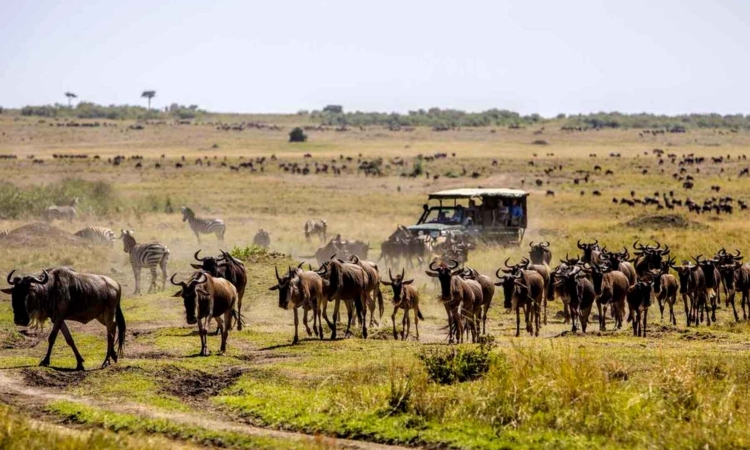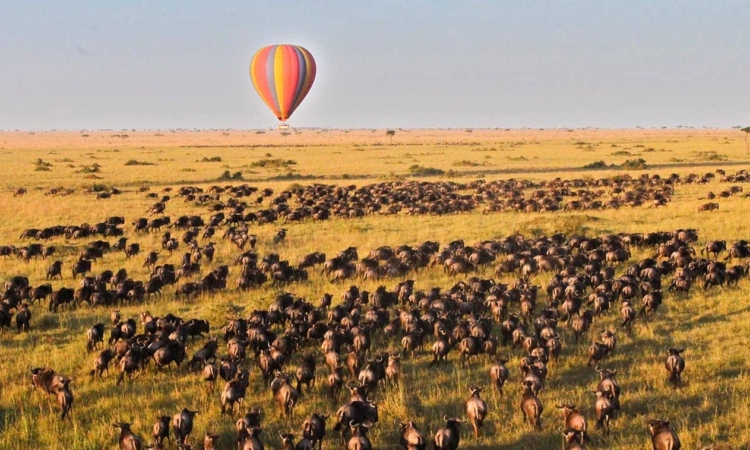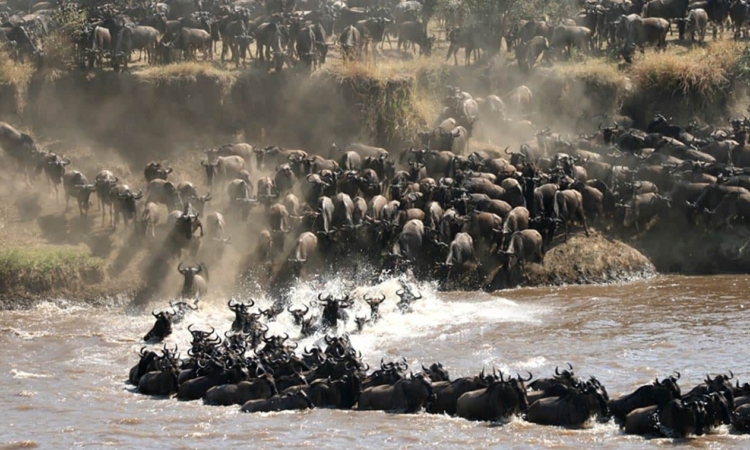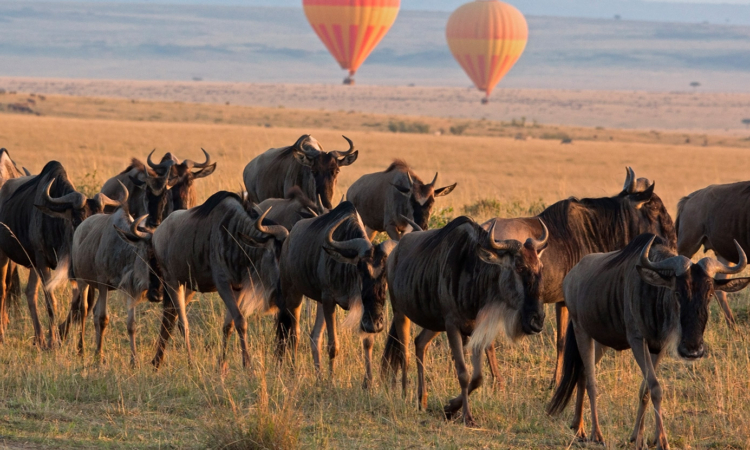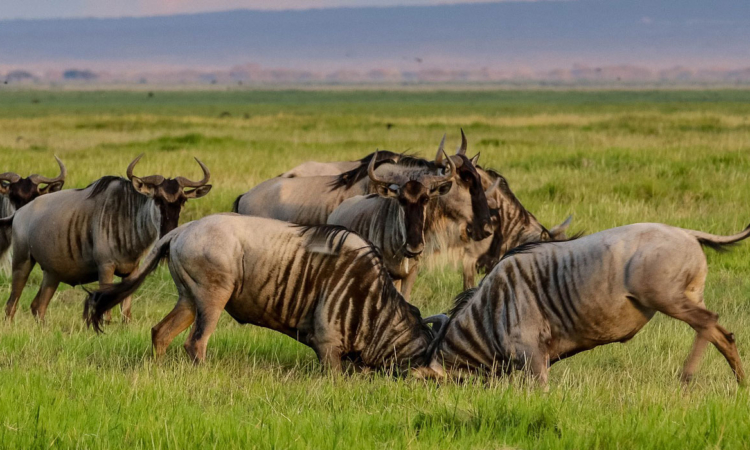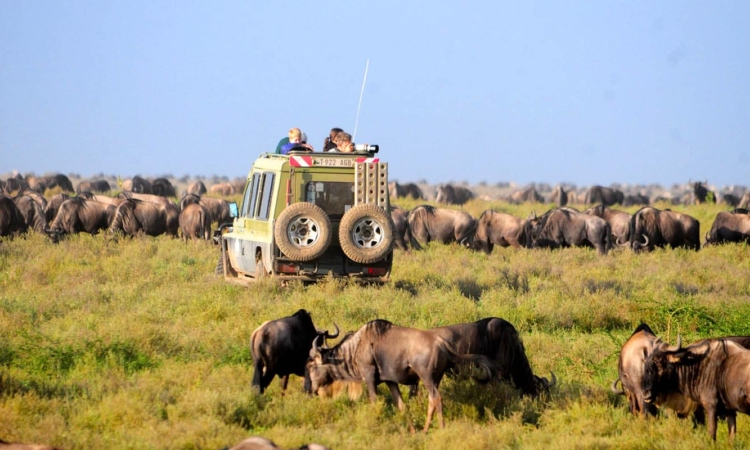
The wildebeests migration is an all year round occurrence that takes place annually, the animals are always on the move from month to month but since the migration takes place every year, it has helped rangers and researchers know the location of large herds of migration during some months.
Wildebeests also known as gnu are divided into two species that is blue wildebeests and black wildebeests endemic to Africa. Thousands of tourists visit Kenya and Tanzania to see one of the most spectacular wildlife migration on earth also dubbed as one of the natural wonders.
Wildebeest migration in January
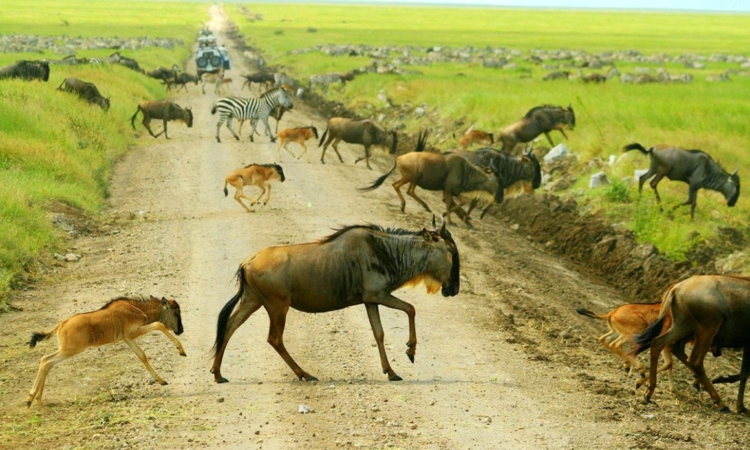
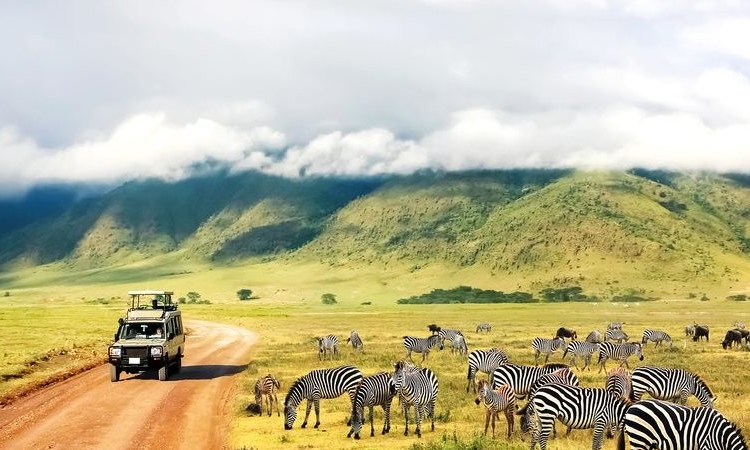
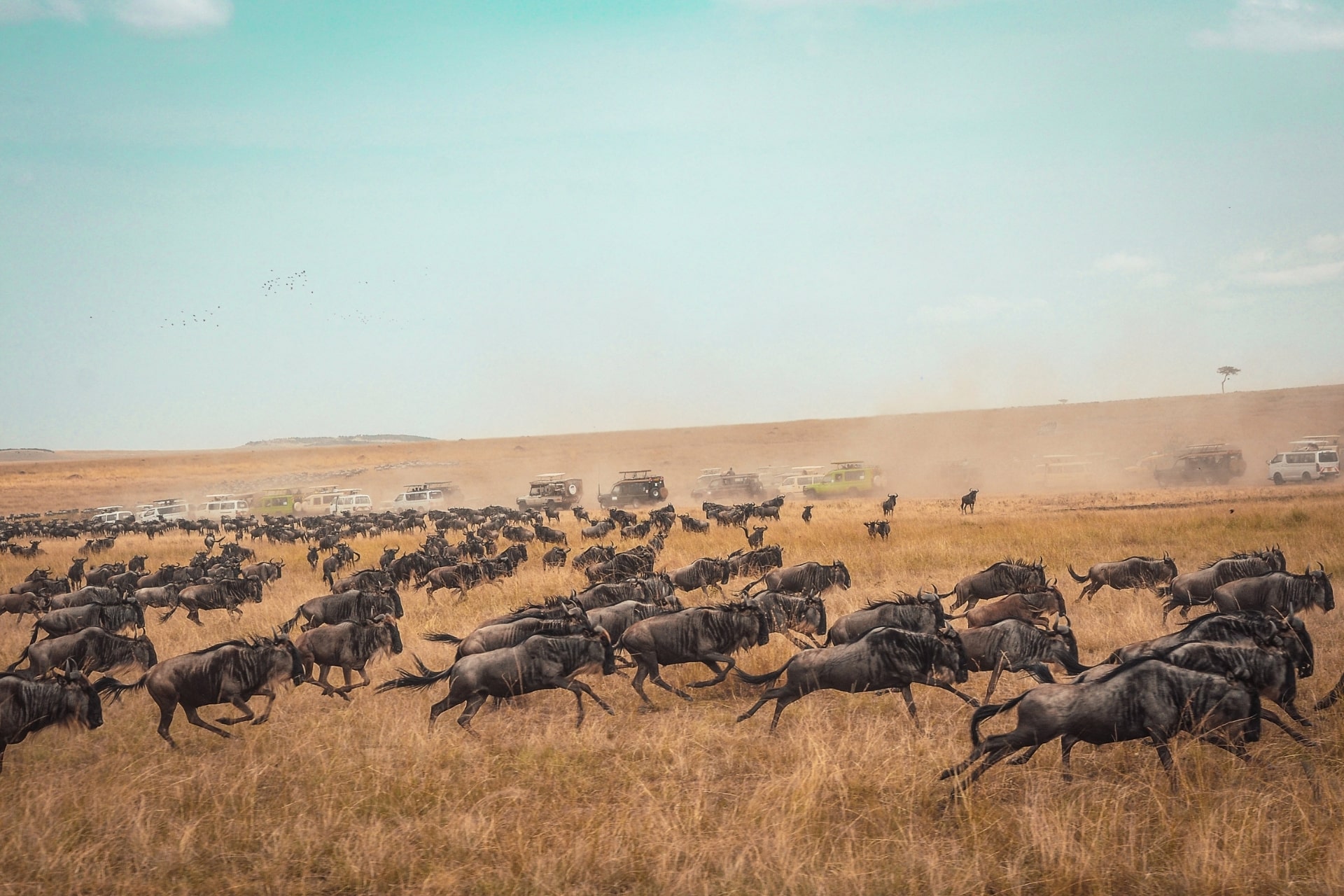
Wildebeest migration in January: The great wildebeest migration happens every year taking place at the Masai Mara game reserve in Kenya, Ngorongoro conservation area and Serengeti national park in Tanzania. This involves about 1.5 million wildebeests, thousands of zebras, numerous Thompson’s gazelles and other antelopes trekking across borders in search of greener pastures and water.
January is a dry season around Serengeti and Masai Mara. But the grass and water from the short rain seasons of November is still available. The grass is short and vegetation not thick providing a good opportunity for viewing the migration. Photographers can also take superb shorts during this time.
During January thousands of wildebeests are born. They prefer to stay in the short grasses in order to watch out for predators that usually take advantage of weak calves.
Visiting during can provide tourists with a thrilling dramatic experience. With chances of witnessing calves being born and also seeing the vulnerable ones get predated at the same time. Calves weigh about 21kgs at birth. Get able to stand within minutes and move with the herd within a few hours.
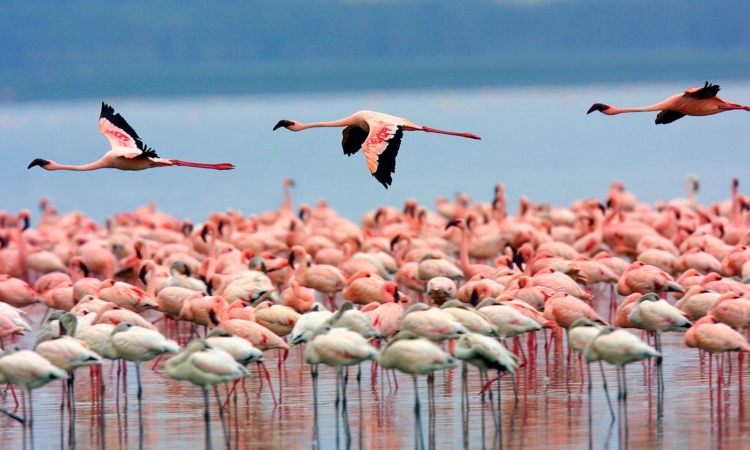
Temperatures range between 15°C and 28°C in January. Most of the animals conjugate in water points making it easier to spot other wildlife. Aside from the migration, bird enthusiasts can get a chance to spot migratory birds during January making your trip even more interesting.
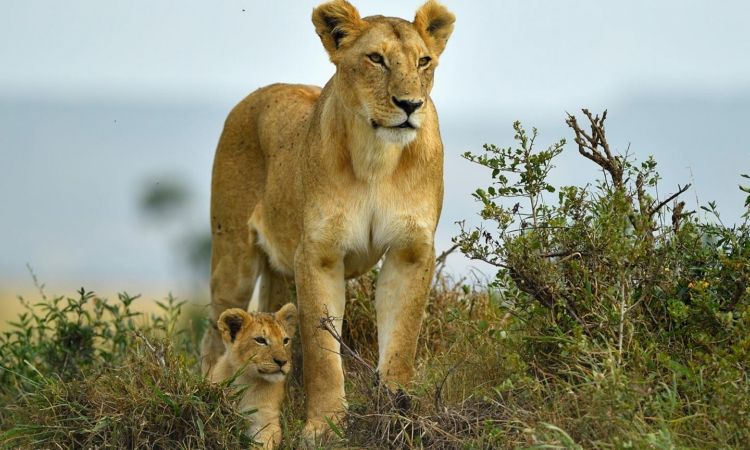
Major predators of wildebeests during the migration are lions, spotted hyenas, leopards, African wild dogs, crocodiles and cheetahs. The young calves are usually protected by their mothers and older wildebeests in the group. Wildebeests are also alert to call alarms from other animals like baboons during predator attacks.
Therefore the best area to visit for unforgettable encounter of the wildebeests migration in January is around Ngorongoro conservation area. Its also advisable to book accommodation around the same area.