Uganda Gorilla Trekking & Wildebeest Migration Guide – Gorilla Trekking & Wildebeest Migration Guide: In the tropical regions of Africa, far away in the East where the sun rises. A captivating true story unfolds, entailing a generational journey involving millions of animals traversing across two neighboring countries, Kenya and Tanzania. These lands are remarkably alike. In providing the ideal living conditions for magnificent creatures and they serve as vital habitats for their long-term sustenance.
The great wildebeest migration is the talk of town among these countries. You can visit either of them and not take part of this incredible journey. As seasons change between Kenya and Tanzania, the wildebeests also prepare to be on the move. When the scorching sun comes and grasses turn dry up and turn brown. The wildebeests start their journey to the areas with green pastures and fresh waters. This is the main reason as to why they are always moving.
Best National Parks to see Wildebeest Migration
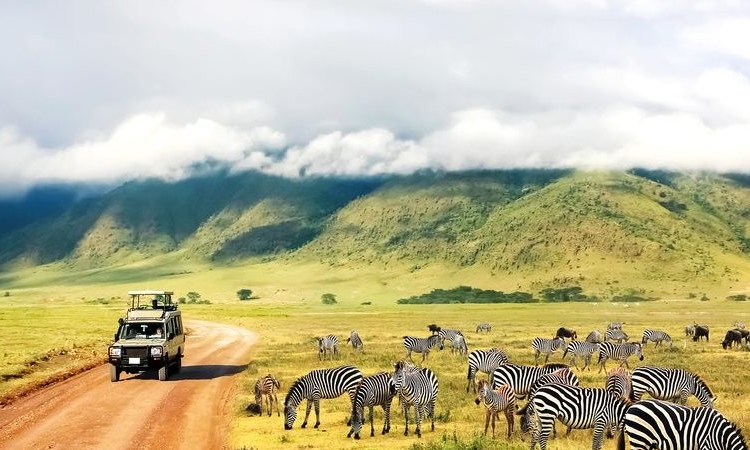
Gorilla Trekking & Wildebeest Migration Guide:The wildebeests and other herbivorous animals love vast grasslands. It’s of no wonder that the two best parks to view this migration. Are characterized by having vast savannah plains and landscapes.
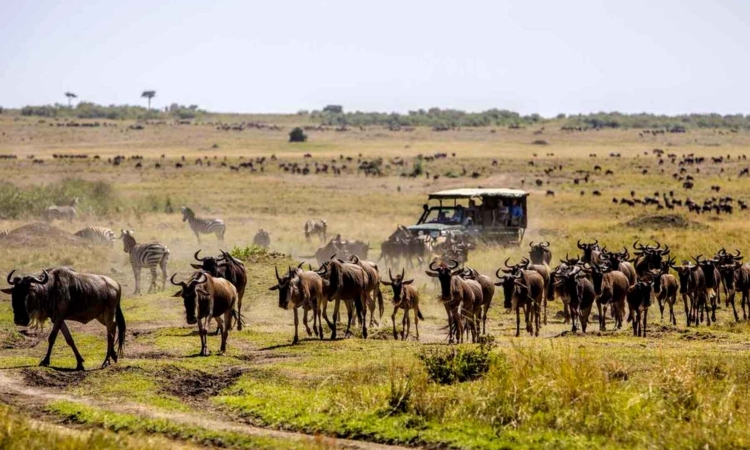
Masai Mara reserve in Kenya is a comfortable home for wildebeests; its succulent grasses are a delicacy among the herbivores, the large plains measuring over 1,510 square kilometers is just enough to accommodate these large numbers of animals.
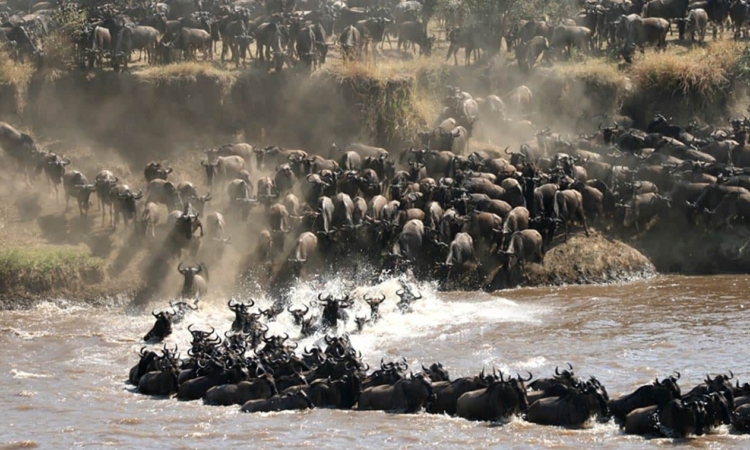
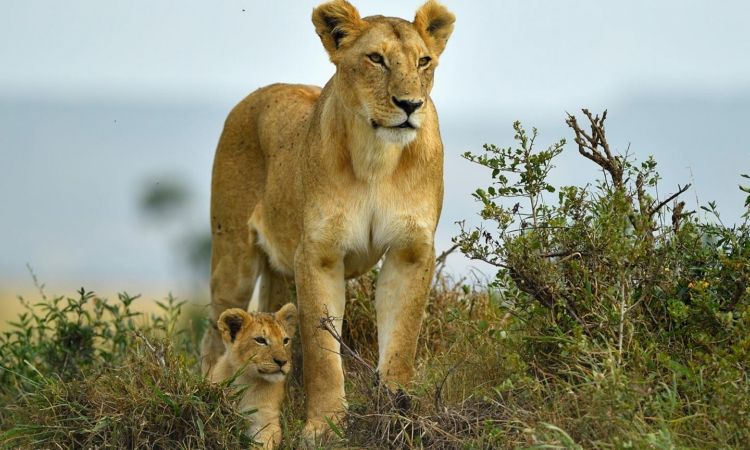
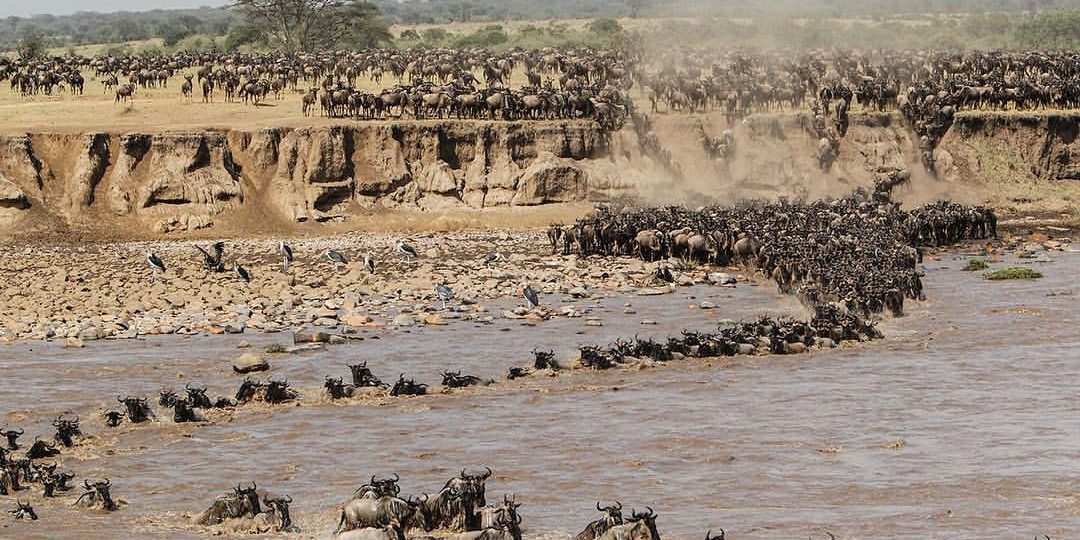
Crocodiles lie patiently waiting for this moment that happens twice in a year, the lions show their power and strength when they attack the animals along the way and also during the rumble at the Mara river.
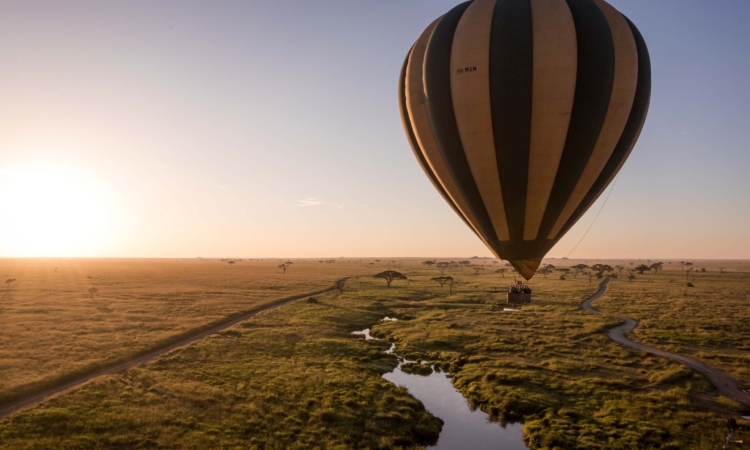
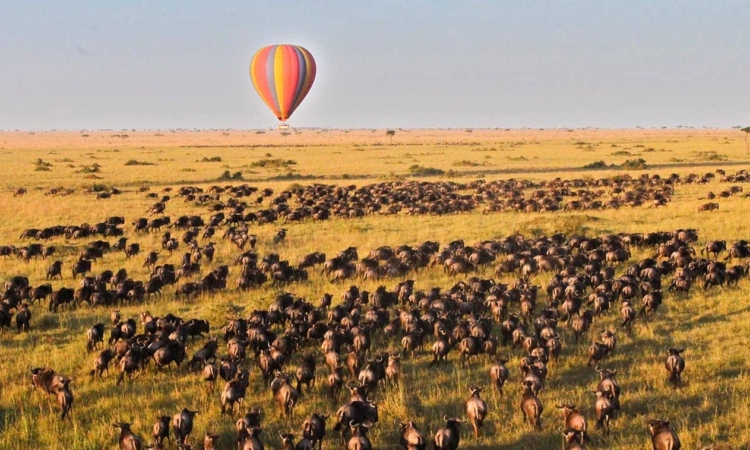
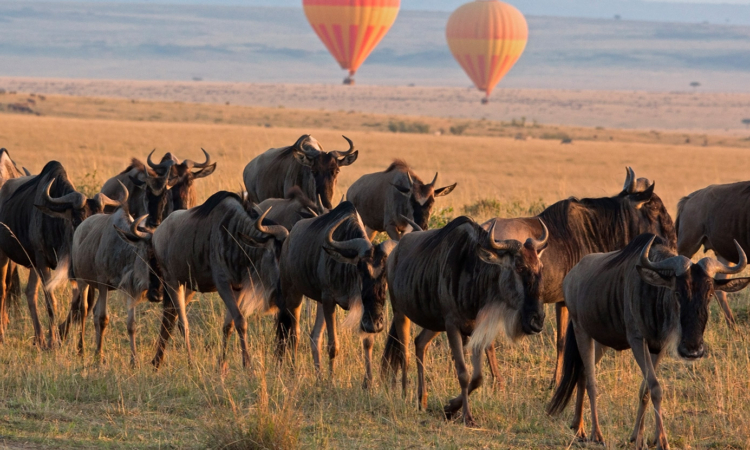
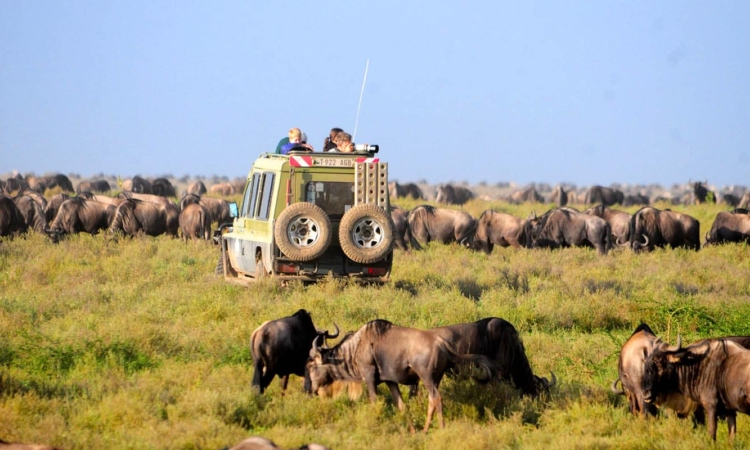
The large numbers of wildebeests can be enjoyed through game drives by escorting and following them, hot air balloon safaris that let you see long trail of animals as they move in a line like they are led by a leader.
Across the border in Tanzania’s Serengeti, another chapter of this magic unfolds – a land where the sun-drenched plains stretch like a never-ending promise. The journey continues, as wildebeests embark upon an odyssey that transcends borders and ignites the spirit of wanderlust. In the Serengeti’s expanse, they find solace, a sanctuary of abundance where life intertwines in an intricate dance.
Other national parks where the migration occurs though at a small scale are Ngorongoro Conservation Area and Grumeti Reserve in Tanzania as well as the Olare Matorogi and Mara Naboisho Conservancies in Kenya.
Enjoying and having the best experience during great wildebeest migration safari all depends on better and smart planning done in advance.
Timing is important
The wildebeest migration is an annual event; though it is a natural occurrence, so different periods of time offer different experiences. Breeding and river crossings occur at different times and there are also visiting a country when the animals have crossed over to a different country, so it is advisable to consult with local tour companies who have updated data to enable you know which periods work better for you.
Hire local tour guides
Having the locals accompany you in an area that they know best will ease your safari experience; these local guides are usually attached to different tour companies. The guides are familiar with animal patterns and know the best spots that offer rewarding experiences.
Select the best National Park
Different national parks offer different experiences, therefore depending on what you would like to witness you have to select the park that offers the best experience such as river crossings are best enjoyed at Masai Mara National Park in Kenya.
Book everything in advance
As you come close to the dates of your migration safari, make sure that you have booked your permits, accommodation, rides in advance to avoid last minute panic which could spoil the whole safari mood.
Pack all the essential equipment
There are must carry items that you can’t miss to carry when out on a safari such as the right clothing especially hats and light clothing because the weather is usually hot but in some cases you can carry heavy clothing when the weather abruptly changes, don’t forget to carry water and food to keep you alive and energetic because the safari is tiring. Other items like cameras to capture beautiful scenes and memories
Select a safari that takes more than one day
As you might have noticed the migration is a long journey and the parks where it occurs are also vast and therefore in order to be able to explore far away spots of the park you need to book a safari that covers more than a day.
Keep in mind that doing your research extensively is the only way you are able to know how to plan better and efficiently.
Interesting facts about the wildebeest migration
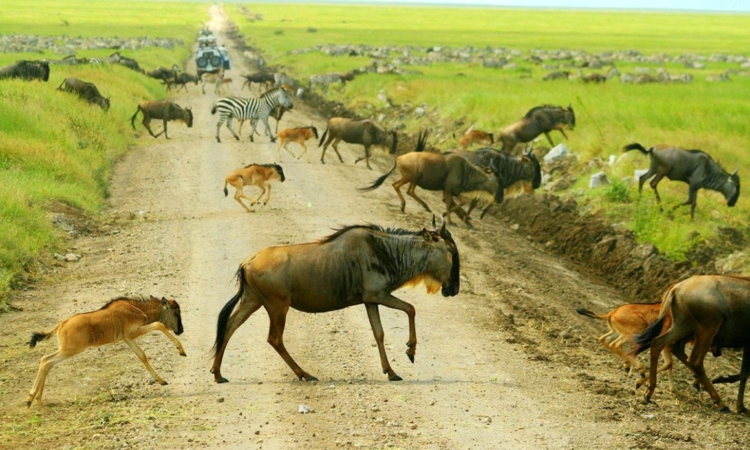
- The great migration consists of over 1.5 million wildebeests and when combined with other animals like zebras, gazzeles and elands, the number comes to over 2 million.
- The migration happens in a cycle, they start by breeding in Tanzania between December and March and later head to Kenya and after come back to Tanzania to breed again.
- The animals cover a total of 800 miles during this great migration.
- The wildebeests are very brave animals, they continue to cross the Grumeti and Mara rivers despite the fact that predators are always waiting for them.
- The migration is an annual event; it happens every year though with slight differences in specific times.
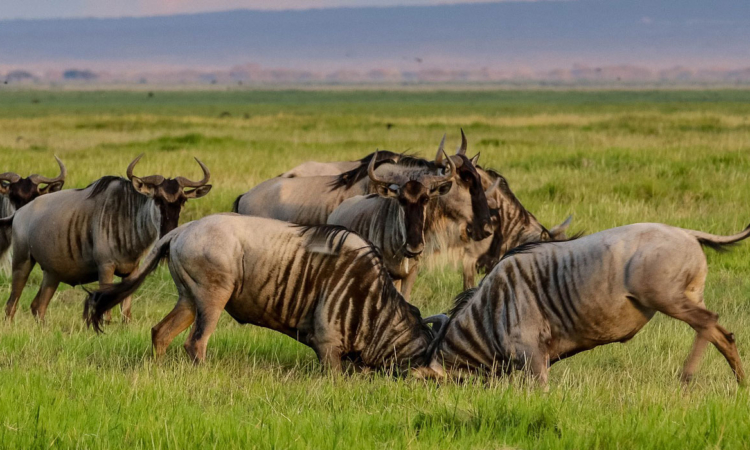
- The wildebeest is not the only animal that takes part in the great migration, however it is accompanied by various animals like gazelles, zebras, elands and predators like lions, cheetahs and leopards.
Best time for a Wildebeest Migration Safari
The migration in Tanzania mostly happens in the Serengeti region, Between December and March. The wildebeest herds are in the Ngorongoro conservation center and Ndutu area where they breed and give birth to off springs, this area during this season is surrounded by predators as they yearn to feast on the young ones, if this is what you would to watch, then this is the best time to visit Tanzania.
From September to November, the wildebeests are still in the Mara region which they then depart towards December for Tanzania and the cycle continues.
Basically, wildebeest migration safaris can be carried out all year round however, you can make visits during the months when animals are in an event that you are interested in.
Gorilla trekking in Uganda
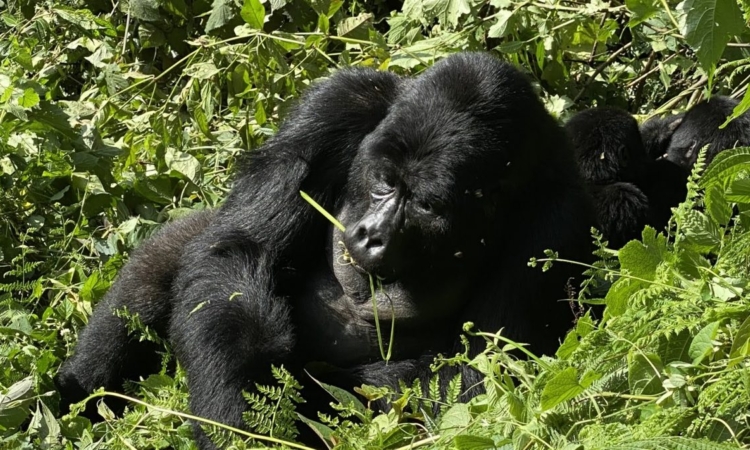
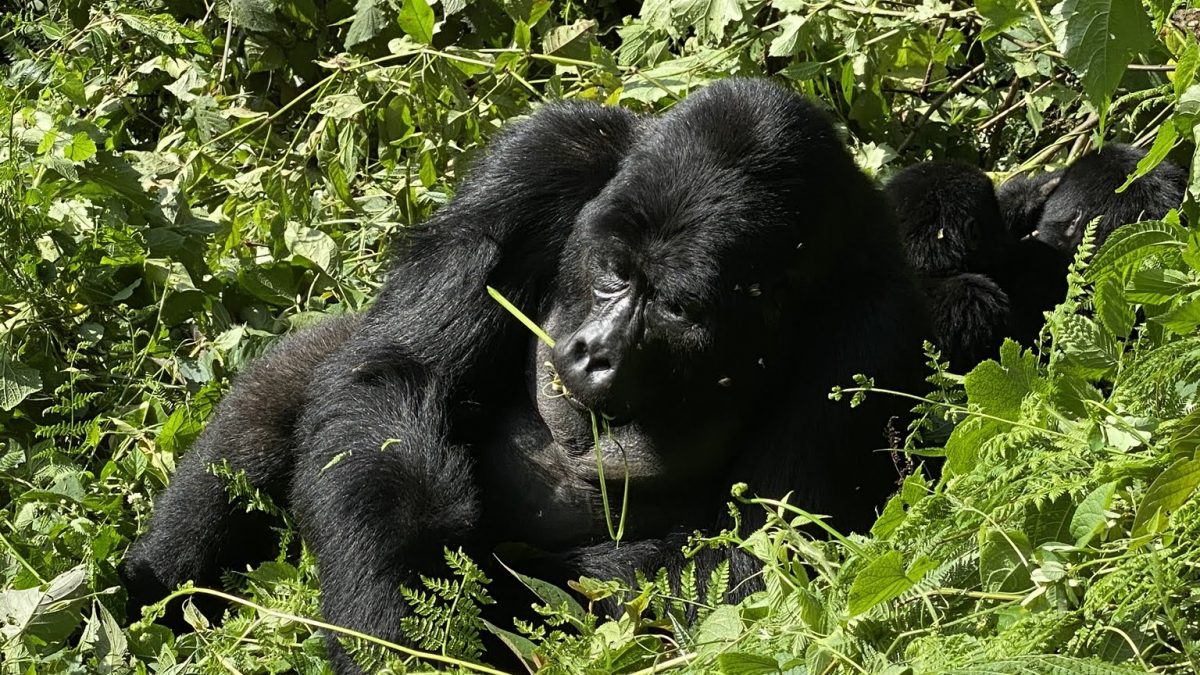
Gorilla Trekking & Wildebeest Migration Guide: The mountain gorillas are a special species of gorillas that stay within the mountains and highland areas. They have thick fur that enables them stay warm despite the harsh and cold conditions of these areas.
Gorillas in Uganda sum up to about 650 in number. Holding about half of the world’s total population which is 1000 individuals. In total there are about 22 gorilla families in Uganda. 21 of them are in Bwindi and Mgahinga only has one gorilla family.
Bwindi Impenetrable National Park is a UNESCO World Heritage site. It has been in existence ever since 1994. The forest is thick and dark due to the dense forest cover. The vegetation is also favorable for the stay of other wildlife besides gorillas. Such as antelopes, wild forest pigs, the African Golden Cat, side striped jackals, white and black Colobus monkeys and chimpanzees.
The main attraction in this park is the mountain gorillas. It only has one family which has now settled on the Ugandan side of Mgahinga. Previously it used to wander off to the Rwandan side which was impenetrable due to the steep slopes.
There are only 22 gorilla families available for trekking found in Bwindi impenetrable national park. About 3 more families are still undergoing the habituation process. It usually takes 2-3 years and soon after that more families will be available for trekking. Hence increasing the number of permits available for tourists. Mgahinga national park has only one fully habituated gorilla group.
Trekking starts in the morning hours kicked off by briefing done by guides. In Bwindi national park, you’ll be able to visit any of the 22 gorilla groups available.
When you head over to Mgahinga national park, you’ll only visit one gorilla family. Nyakagezi family, you won’t have much trouble locating them. They seem settled unlike the previous years where they roamed around D.R. Congo and Ugandan forests. In order to locate gorillas much faster, some of the trackers go before you to confirm that gorillas are available for trekking. The treks take about 4-6 hours depending on their location.
Groups of eight people are the recommended and allowed numbers to visit a gorilla family in 24 hours. Only individuals who are 15 years and above can carry out gorilla trekking. So once you meet a given gorilla family, you get to spend about 1 hour observing the primates.
Similar trekking guidelines in Bwindi impenetrable forest also do apply in Mgahinga national park. However there is more than just gorilla trekking in any of the two parks. Bwindi offers both gorilla trekking, gorilla habituation experience and nature walks. While Mgahinga national park offers gorilla trekking and golden monkey trekking which are both exciting adventures.
Cultural tours and encounters are some of the added activities you can take part in while at any of these parks. During their stay in the park, gorilla numbers were few. However after their eviction in 1991, they decided to settle at the periphery of the forest. When you encounter them, take part in their vibrant dances, songs and also admire some of their art works. Visit their communities and donate to make their lives better.
Besides gorilla trekking in Mgahinga, tourists can hike to the top. Here they get to set foot in three countries at the same time. Hiking to the top also rewards one with beautiful scenery of mountains like Sabyinyo and Muhabura
Gorilla trekking in Uganda permits cost $700 for foreigners. This is the second cheapest price compared to Rwanda which offers permits at $1500. However, gorilla habituation experience in Uganda costs $1500. You can also contact tour companies to select your packages that are budget friendly.
The best time to carry out gorilla trekking in Uganda is when rains are less. Especially in January to March and June to September. However, the activity is open all year round.