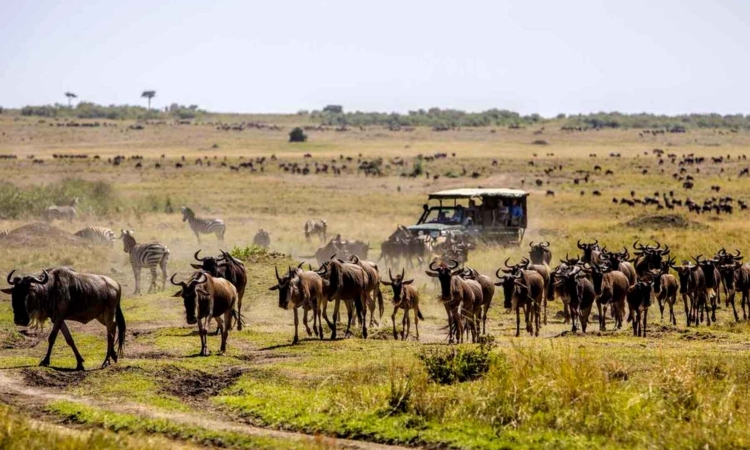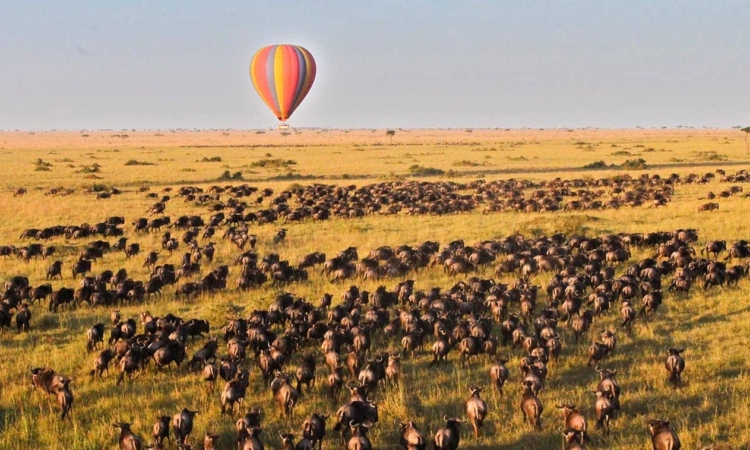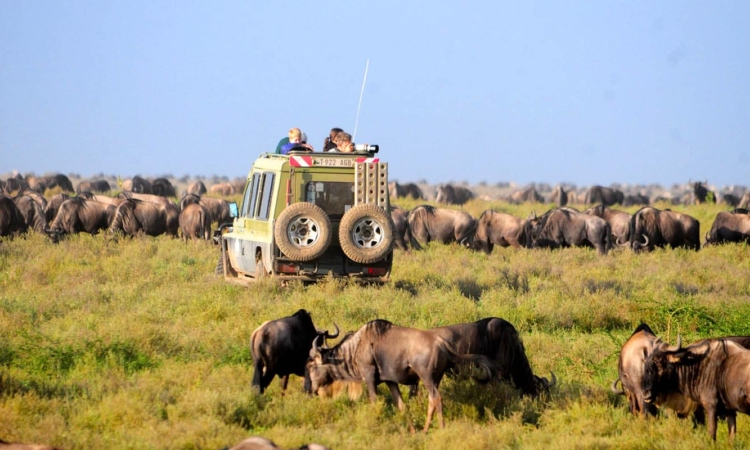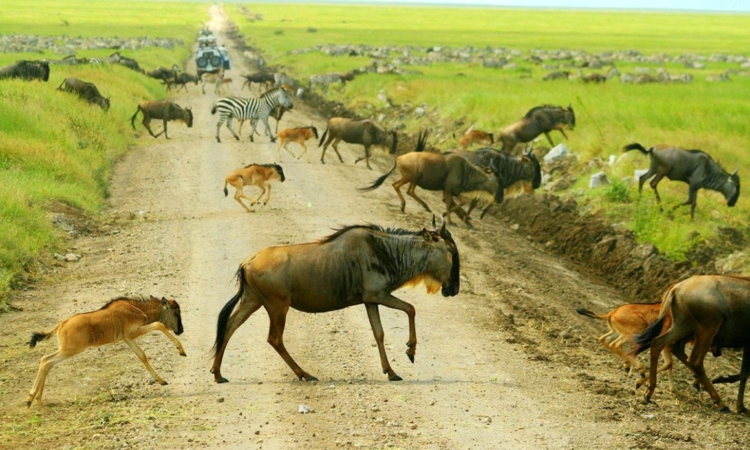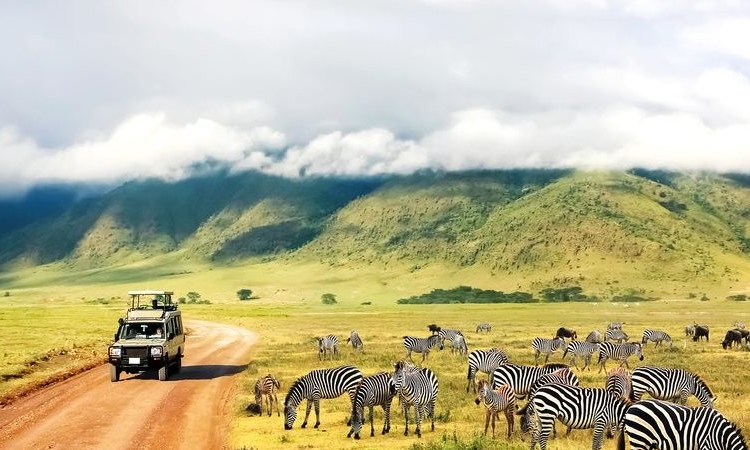
Facts about the wildebeests migration – The wildebeests migration is a great wildlife spectacle that happens between Tanzania and Kenya every year. This dramatic wildlife migration takes place from Ngorongoro conservation area, Ndutu plains, Serengeti national park and Masai Mara game reserve.
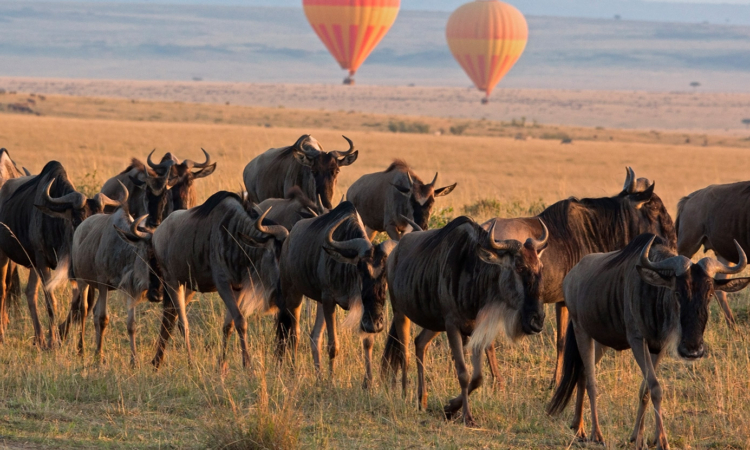
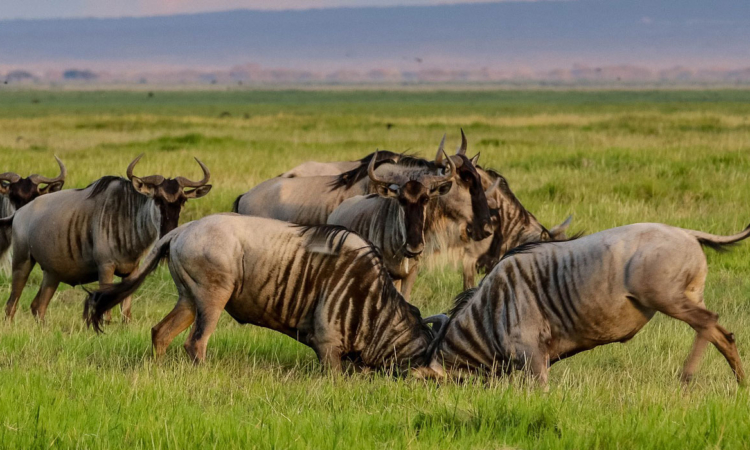
During the migration, over 1.5 million wildebeests, thousands of zebras, hundreds of Thompson’s gazelles. Hartebeests, topis, elands and other antelopes mice in large herds across Serengeti and Masai Eco system.
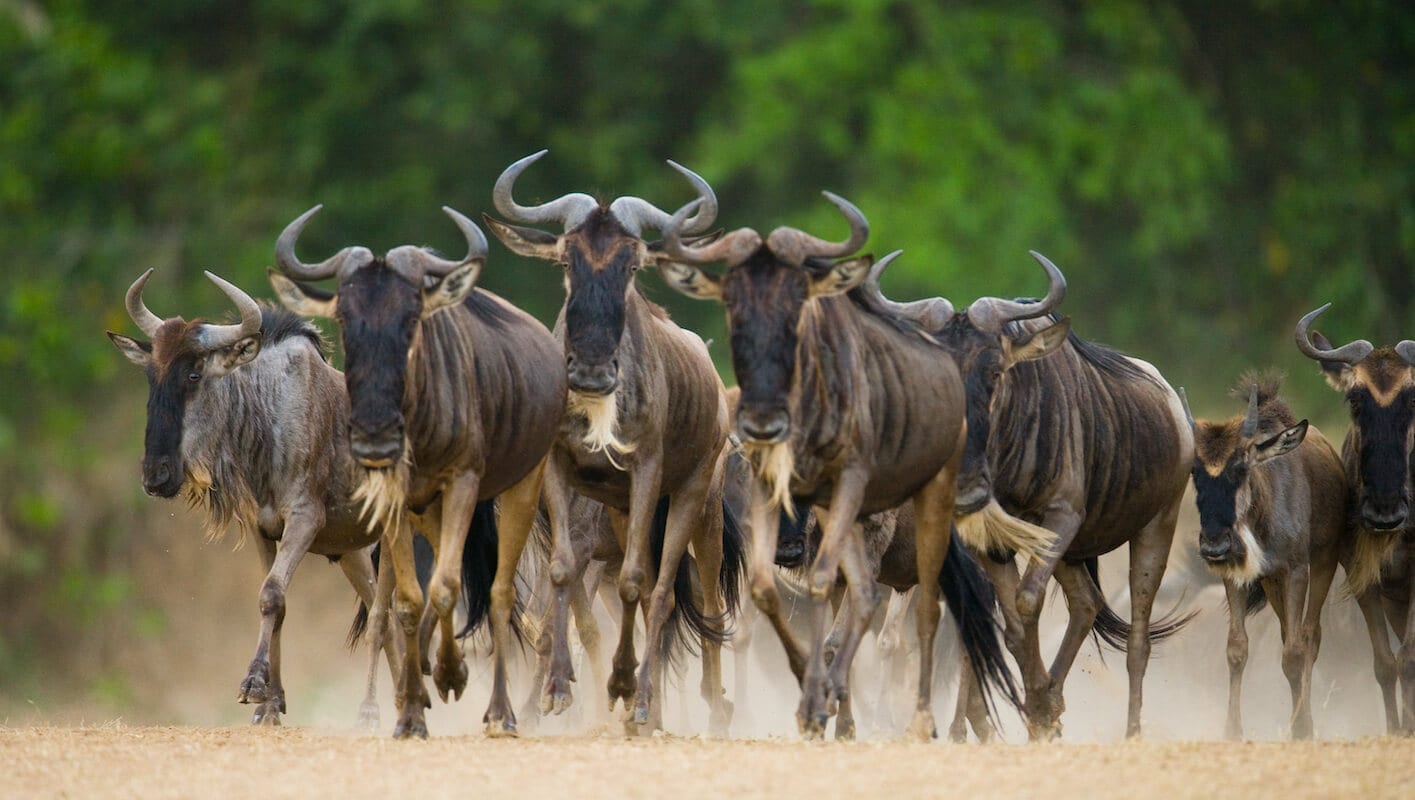
The exact reason for the wildebeests migration is unknown. But scientists and researchers suggest that the animals move by instinct following thunderstorms and lightening. From a far hence they move in search of fresh nutricious grass and water.
The animals follow the same migration routes annually moving in unending circular pattern.
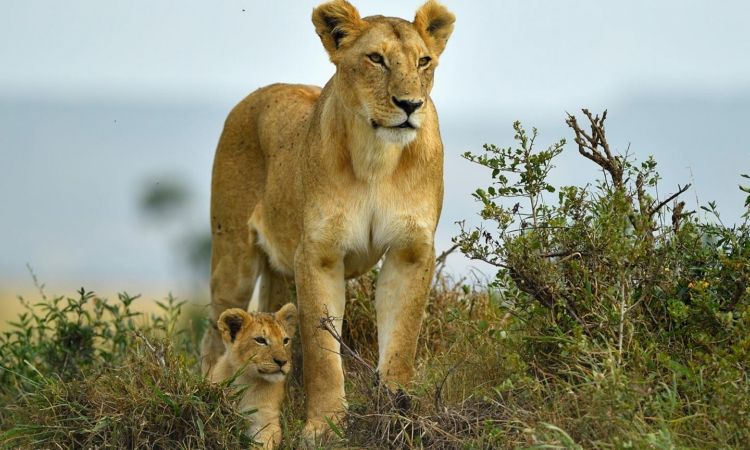
From January to early March, the migration herds can be seen around Ngorongoro conservation and Ndutu areas. This is also the calving season where almost 8000 wildebeests are born in a day. Predators like lions, leopards and cheetah sightings are common during this time of the year. From Ndutu plains as they aim at hunting the newly born weaklings
During the migration about 250,000 animals die on the way with the main cause of death being exhaustion, starvation, predation and thirst.
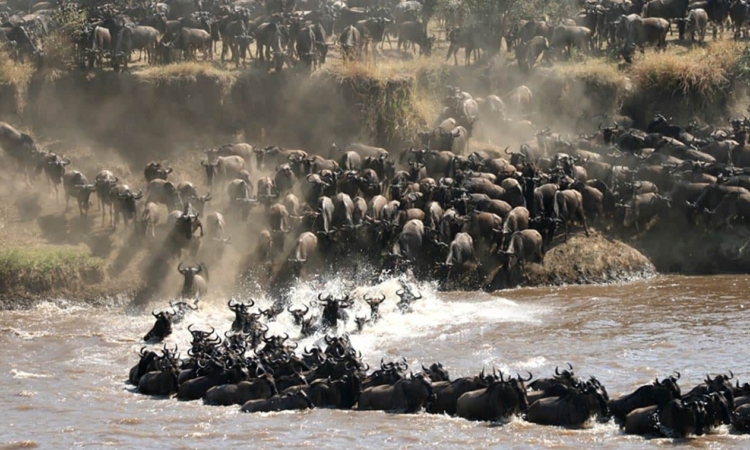
The Grumeti and Mara river crossings are some of the most sought highlights of the great migration. Numerous crocodiles in both rivers wait to grab prey during the river crossings.
From April to May, the migration herds move towards Serengeti national park and disperse across the plains. In June herds cross the Grumeti River and graze at the shores of the Mara River before starting to cross in July. The crossings continue throughout July and August, the migration herds stay in Masai Mara until in October when they move back to Tanzania in a clockwise direction.
The wildebeests and zebras are able to live and coexist together because they both eat different parts of the same grass. The great wildebeest migration also contributes to ecosystem of Serengeti and Masai Mara in that they soften the soils with their hooves and moisturize it with urine.